3D Building Projection Mapping: From Script to Show Night
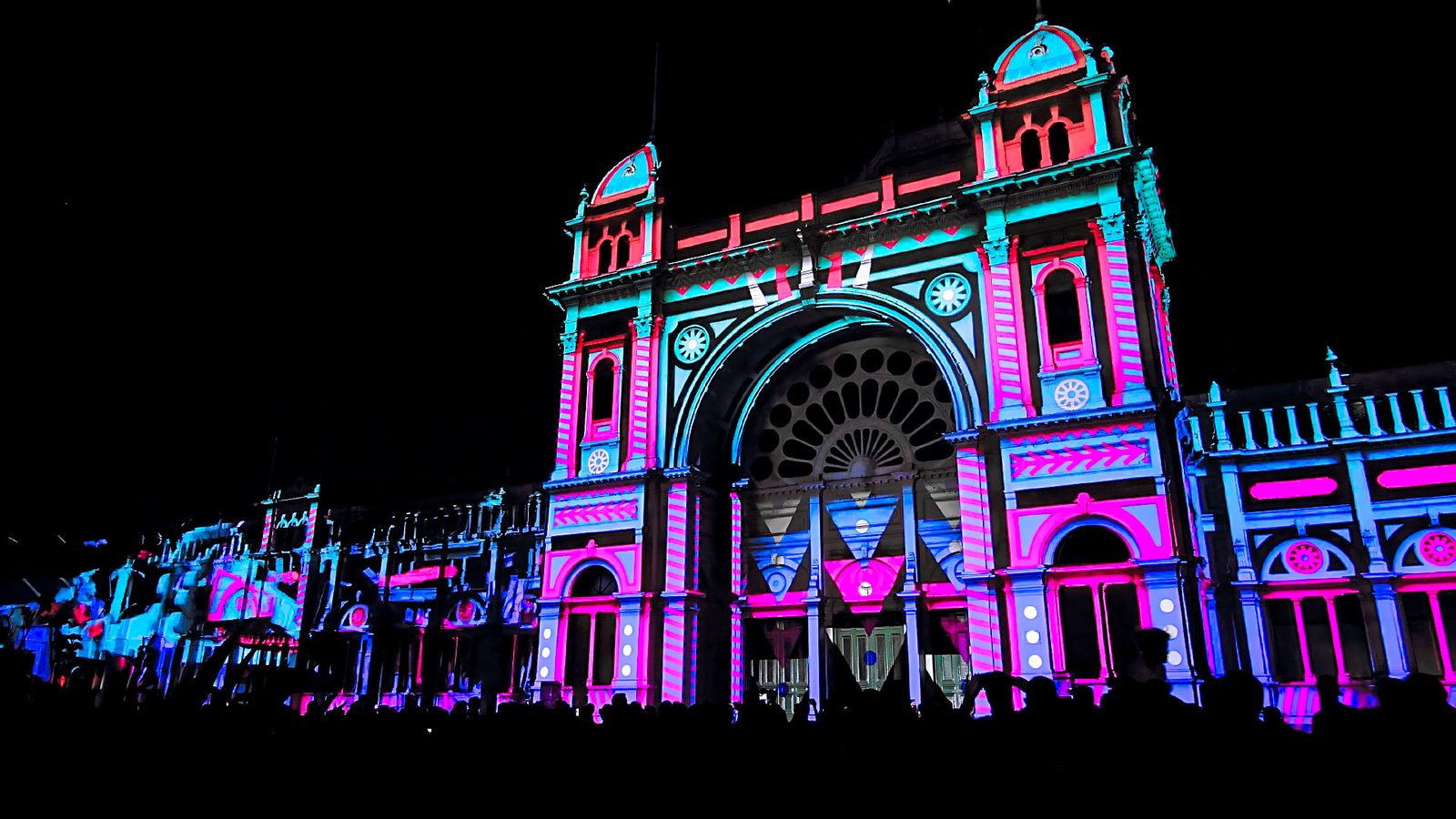
How a facade show actually gets built: survey, modeling, creative script, content, alignment and show night — with brightness rules, timelines and real cost structure.
An old facade shatters and reassembles inside a single beam of light; a whale leaps out of a wall while a hundred phones record it. That is the pull of 3D building projection mapping — and the gap between a show like that and a disappointing one is almost never the projector. It is process. Here is the full pipeline from first survey to show night, with the numbers that decide whether it works.
Why Facade Shows Pull Crowds
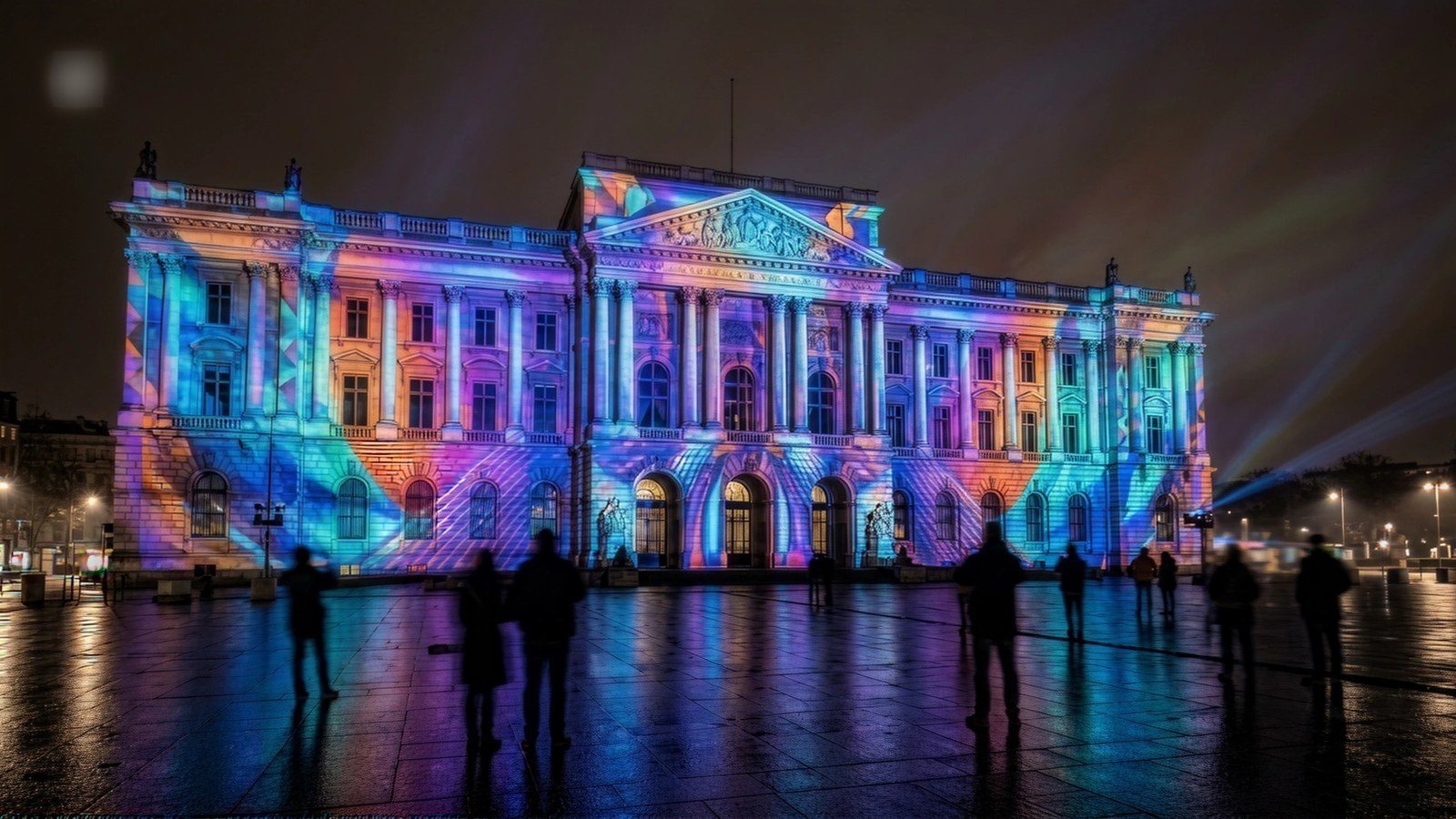
Building projection mapping uses an entire structure as the canvas: animation modeled to every column, cornice and window so the architecture itself appears to move. Vivid Sydney lights the Opera House sails for millions of visitors a year; Gulf landmarks run facade shows for national day and New Year; light festivals across Asia now treat the building show as the anchor attraction. For an organizer the value stacks three ways: on-site footfall of thousands to tens of thousands per show, feeding nearby food and hotel revenue; social amplification, because a 15-second clip of a giant facade outperforms the same budget in conventional advertising; and, for permanent installs, a repeatable night-tour product instead of a one-off fireworks spend. The market is moving the same direction — China's immersive performance box office grew about 37% year on year to roughly CNY 2.5 billion (about USD 350 million) in 2025, and building shows are a core driver.
The Three Technical Pillars
Brightness, calculated from the site. Facade shows run outdoors at night, so start from ambient light. Small facades up to about 200 m2 need 10,000–20,000 lumen engineering projectors; landmark surfaces above 1,000 m2 typically take the 25,000–35,000 lumen class; and in a glowing commercial district add 30–50%. Throw distances, lens ratios and mounting positions must be locked during the survey — discovering "not bright enough, not wide enough" on install day is not recoverable.
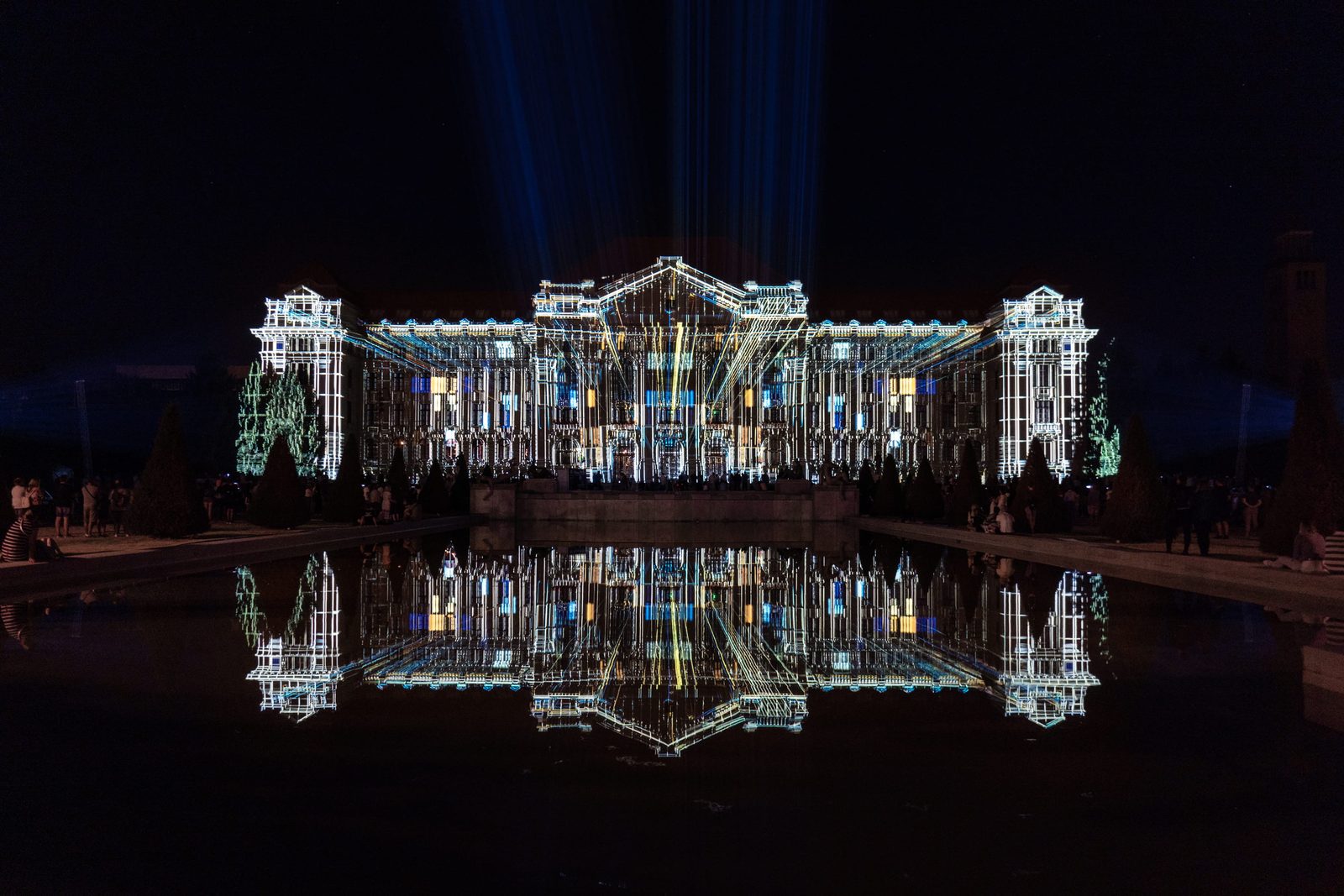
Blending and geometry. No single projector covers a large facade. Plan 2–8 or more units in zones with 15–25% pixel-level edge blending, then geometrically map content onto colonnades, window reveals and ornament so the image reads as grown into the masonry. A media server drives all outputs and supports previsualization.
A model worth projecting onto. Content is built on a 3D model of the actual building: photogrammetry from a photo set is enough for mid-size projects, while landmarks justify LiDAR point clouds accurate to millimeters. Model accuracy decides content fit — a 10 cm error shows on site as an image torn in mid-air.
The Pipeline From Survey to Show Night
| Stage | Key work | Typical duration | Deliverable |
|---|---|---|---|
| 1. Brief and site survey | Theme, budget, viewing side; measure facade, ambient light, power, rigging points | 3–7 days | Survey report, projector map |
| 2. Facade modeling | Photogrammetry or LiDAR capture of structure and materials | 1–2 weeks | Accurate 3D building model |
| 3. Creative script | Narrative, storyboard, music style tied to architectural features | 1–2 weeks | Script and animatic |
| 4. Content production | 3D animation matched to the model, window by window | 3–6 weeks | Final film, usually 4K/8K |
| 5. Equipment deployment | Projectors, media server, power, weather housings | 3–7 days | System ready on site |
| 6. Alignment and blending | Geometric correction, edge blending, layer-by-layer mapping | 2–5 days | Seamless fitted image |
| 7. Full rehearsals | Content, music and lighting cues run together; contingency drills | 1–3 days | Show cue sheet |
| 8. Shows and operation | Scheduled performances, inspections, seasonal content updates | Ongoing | Operations log |
Event companies most often underestimate stages 4 and 6: content is 40–60% of total project cost, and alignment can only happen at night, so it runs on overtime. Squeezing either one shows up on the wall.
What a Show Actually Costs
There is no standard price, but the cost structure is remarkably consistent:
| Cost item | Typical share | Notes |
|---|---|---|
| Content production | 40%–60% | Duration, detail level, live footage vs 3D modeling |
| Equipment (mostly rental) | 20%–35% | High-lumen projectors, media servers, blending systems |
| Installation and commissioning | 10%–15% | Rigging, cabling, night alignment hours |
| Logistics and insurance | 5%–10% | Oversized equipment transport, work-at-height cover |
| Show support | About 5% | Standby technicians through the run |
A one-off event show (rented equipment plus 3–5 minutes of content) typically starts around USD 14,000 and up; permanent scenic-area installations with multiple high-lumen units, long-term content licensing and maintenance generally start around USD 140,000. A mid-size show needs 6–10 weeks from contract to premiere — for festival and New Year slots, lock equipment and crew 2–3 months ahead.
An Engineer's Checklist for Facade Projects
- No quotes from photos. Ambient light and facade material (glass curtain walls eat brightness through reflection) must be measured on site.
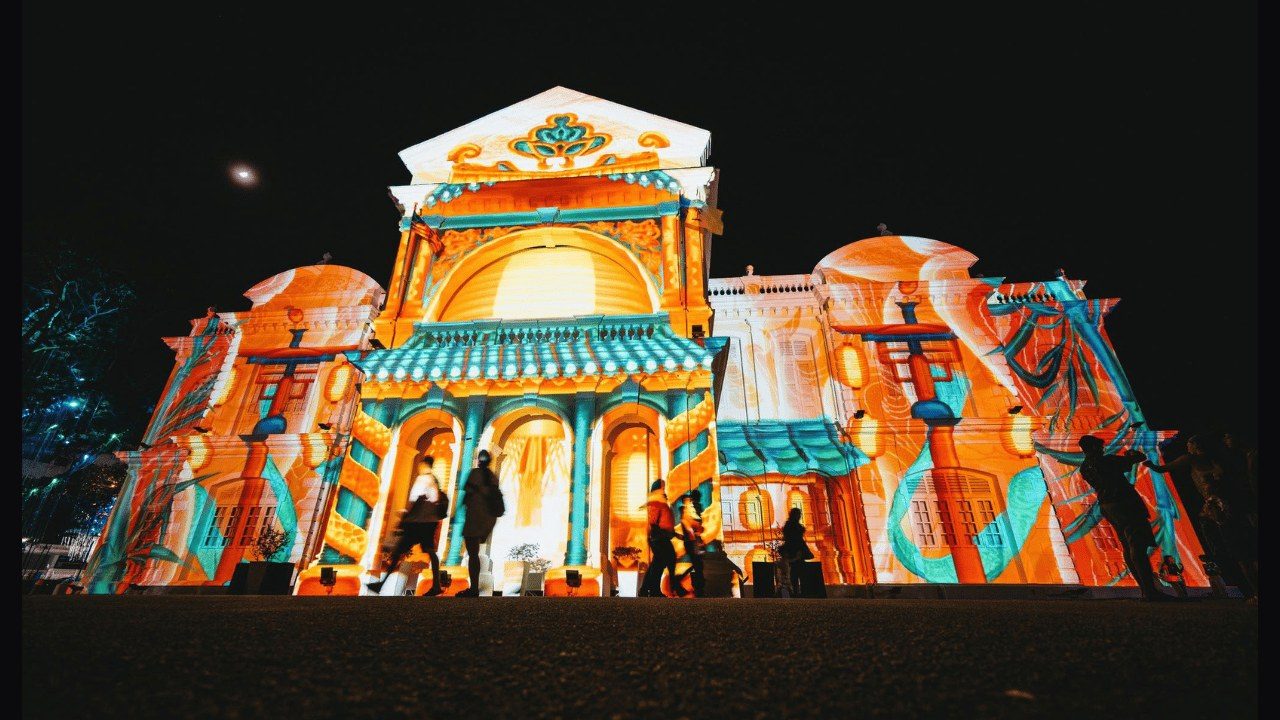
- Content built on your model. Ask the supplier for a production demo based on this building's model — generic stock footage falls apart on a real facade.
- Laser sources and weather protection. Long-run outdoor units want 20,000+ hour laser engines in IP-rated housings.
- Backups written into the contract. Show-grade projects should carry hot spares for the playback server and key projectors, with a defined failover time.
- Content licensing in years. Buyout, 3-year license or annual subscription changes your update economics — settle it before signing.
Aurora Vision provides high-lumen engineering projectors and turnkey facade show packages for overseas cultural-tourism and municipal projects. Send us the building's dimensions, a site photo and your target date — we will come back with a projector layout, budget band and timeline.