Holographic Projection Applications: Gauze, Fog, Film, Fans
Four very different technologies are all sold as holograms. Compare holo gauze, fog screens, Pepper's Ghost film and hologram fans by effect, cost and venue fit.
Every event company and wedding studio eventually gets the same brief: make something float in mid-air. The market answers with four technologies that all carry the word "hologram" — and they behave nothing alike on site. Strictly speaking, none of them is true wavefront holography; all four are optical tricks that place glowing imagery where the audience expects empty air. That is not a criticism. It means the buying decision is purely practical: match the method to your venue, your light level and your budget.
Four Technologies Sold as "Holograms"
- Holo gauze — an ultra-fine metallized gauze hung above or in front of the stage. The audience barely sees the gauze; projected imagery appears to hang in the air. It supports 3D polarization and dual-layer stacking, so performers can appear to walk through the image. Seamless widths approach 10 m, and the material is light enough to tour — the default for concerts and launches.
- Fog screen — an ultrasonic fogger builds a stable curtain of water mist that acts as the screen. The image genuinely floats in air and guests can walk through it, which is why entrance rituals and museum lobbies love it. The trade-offs: low brightness, soft focus, only bold simple graphics, and it demands still indoor air. Outdoors it is essentially unusable.
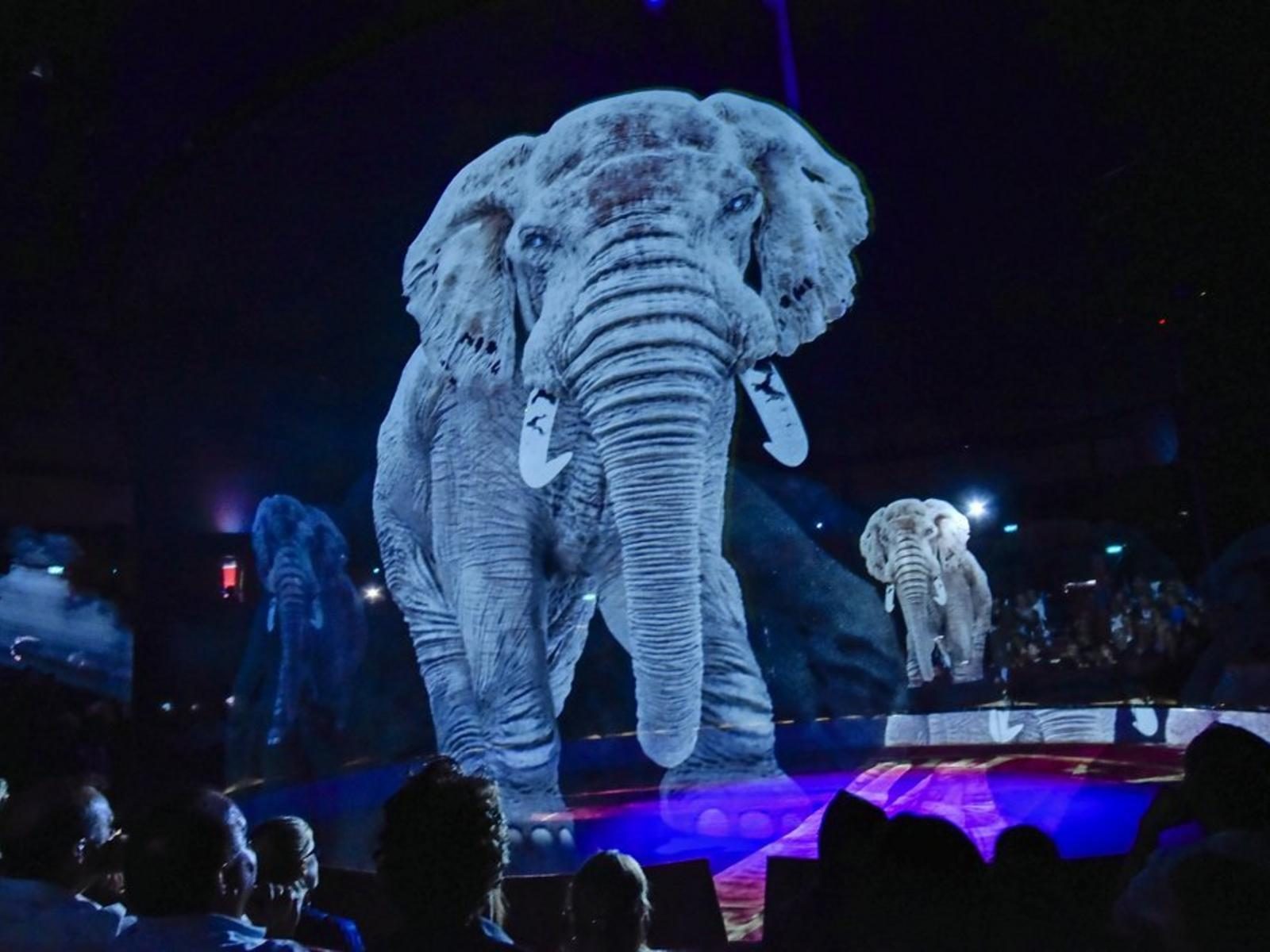
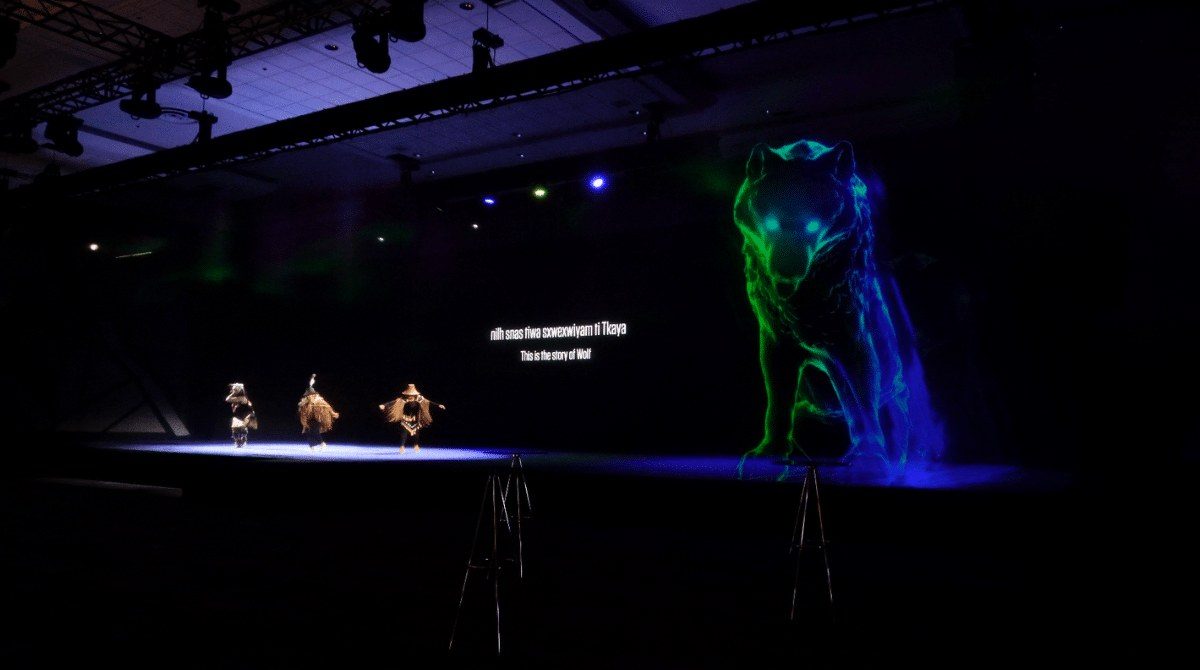
- 45-degree film and Pepper's Ghost — a 160-year-old stage illusion. Imagery is projected onto a highly reflective film set at 45 degrees; the reflection merges with the real scene behind it, producing eerily lifelike virtual performers. Light loss is small and the image is sharp, which is why tribute shows, virtual idols and museum restorations use it. It needs a dark environment and hidden structure.
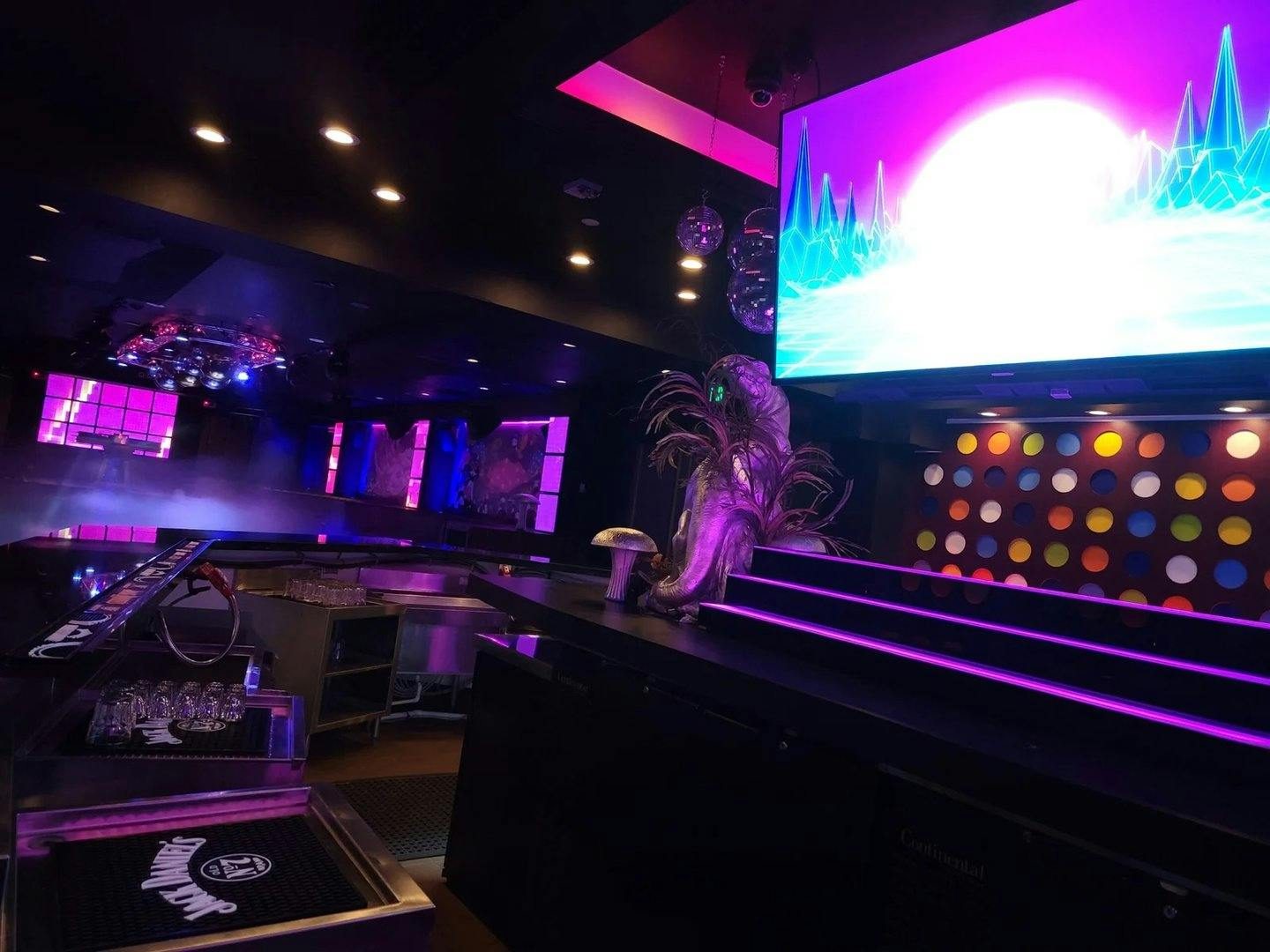
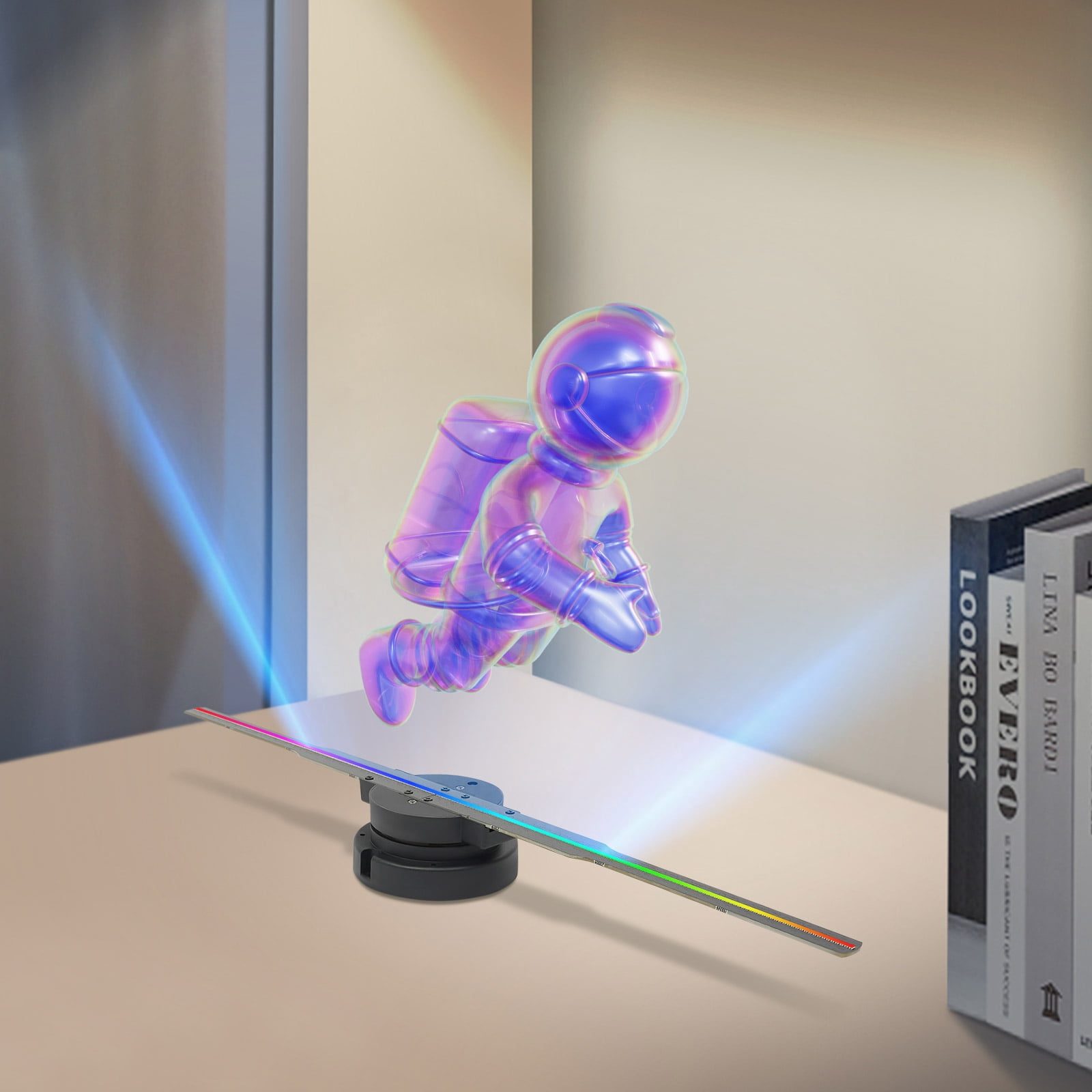
- Hologram fan — spinning LED blades draw animations in mid-air through persistence of vision. It is the cheapest and simplest entry point, ideal for shop windows, booths, bars and wedding aisles. Watch for rotor noise, required safety guarding, and washed-out brightness under strong ambient light.
Cost and Fit at a Glance
| Method | Medium | Visual result | Indicative cost | Typical use |
|---|---|---|---|---|
| Holo gauze | Metallized gauze | Large scale, layers with live performers | Gauze from roughly $100+ per m2; full shows $5,000–$70,000+ | Concerts, launches, wedding backdrops |
| Fog screen | Ultrasonic mist curtain | Image in true air, walk-through | About $4,000–$21,000 per system | Wedding entrances, retail openings, lobbies |
| 45-degree film | Reflective film | Lifelike virtual people and objects | Film roughly $50–$200 per m2; installs $7,000–$70,000 | Virtual performances, museum restoration |
| Hologram fan | Spinning LED blades | Strong 3D pop at close range | About $60–$1,000+ per unit; clusters more | Windows, booths, bars, aisles |
Figures are common market ranges (converted from typical CNY quotes) and shift with size, brightness and content — treat them as budget anchors, not quotations.
Weddings and Stage: Where Holography Pays Back
Weddings are the highest-ticket, most repeatable holography business. Three plays dominate: a gauze backdrop that blooms with petals, starfields or dress animations at cue moments; synchronized floor and runway projection so the couple walks through light; and 45-degree film for a "virtual officiant" or a remote relative appearing on stage — a strong emotional premium. A starter package of one gauze plus two projectors lands in the low thousands of USD, while per-event effect fees run roughly $400–$2,100 (CNY 3,000–15,000), so wedding channels in peak season commonly recover the hardware inside 2–3 months. Large concerts push the ceiling: real-time tracking of performers and virtual idols sharing the stage with dancers. There the hard part is not hardware — it is frame-accurate alignment of content with music and lighting cues, which is why content teams rehearse on site 2–4 weeks before the show.
Retail and Museums: Small Formats, Steady Returns
For product display, the 45-degree showcase — the "holo case" — is the workhorse for jewelry, watches, auto parts and digitized artifacts: the object or its 3D scan spins slowly inside the case with captions, at a few hundred to a few thousand USD per case and near-zero maintenance. Museums use holographic film to restore fragile or lost artifacts: scan the piece, then present the original as a floating apparition — protective and spectacular at once, now a standard move in overseas museum digitization. Hologram fans keep spreading through retail because the entry ticket is tiny: one 65–100 cm fan looping a product animation in the window, dimmed by day, at its best after dark.
A Buyer's Checklist
- Check ambient light first. Gauze and 45-degree film want the room at 50 lux or below; make the lighting designer commit to a "hologram moment" blackout.
- Buy brightness one class up. Gauze transmission costs light; the larger and brighter the venue, the more lumen headroom you need.
- Budget the content. Content is 70% of the effect. Custom 3D is priced per second; confirm licensing and whether it can be edited later.
- Judge fans on three things: LED density, a finger-safe guard, and noise under 40 dB for weddings.
- Pilot the fog screen. Water quality and air conditioning upset it — rent one event before you buy.
Aurora Vision supplies holo gauze, holographic cases and matched engineering projectors to overseas event companies, wedding studios and integrators. Send us your venue, ambient light and viewing distance and we will recommend the honest minimum — not the most expensive option.