Immersive Space Guide: teamLab Lessons and Real Budgets
Why teamLab deploys 500+ laser projectors per venue, how to size your own immersive space, and the real budget ranges from a 50 m2 room to a 1,000 m2 attraction.
Why does teamLab Borderless keep visitors queuing around the block — and why are owners willing to spend hundreds of thousands of dollars building similar venues? This guide breaks down what an immersive space actually is, how the system is engineered, how to estimate projector counts, and the real budget ranges from a single room to a full attraction. Read it and you will be able to answer "how much does an immersive space cost" with numbers instead of guesses.
What Separates an Immersive Space From a Projected Wall
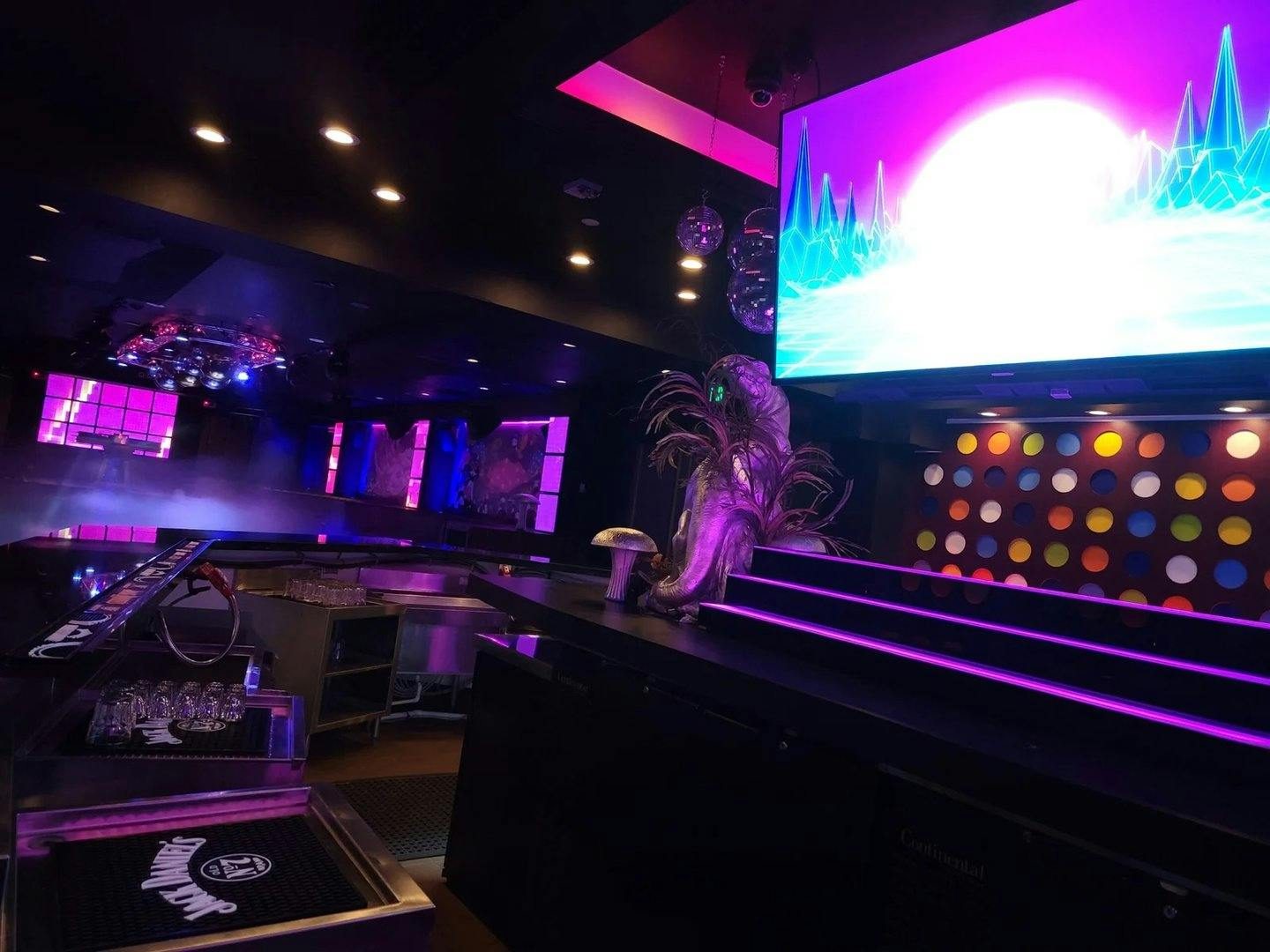
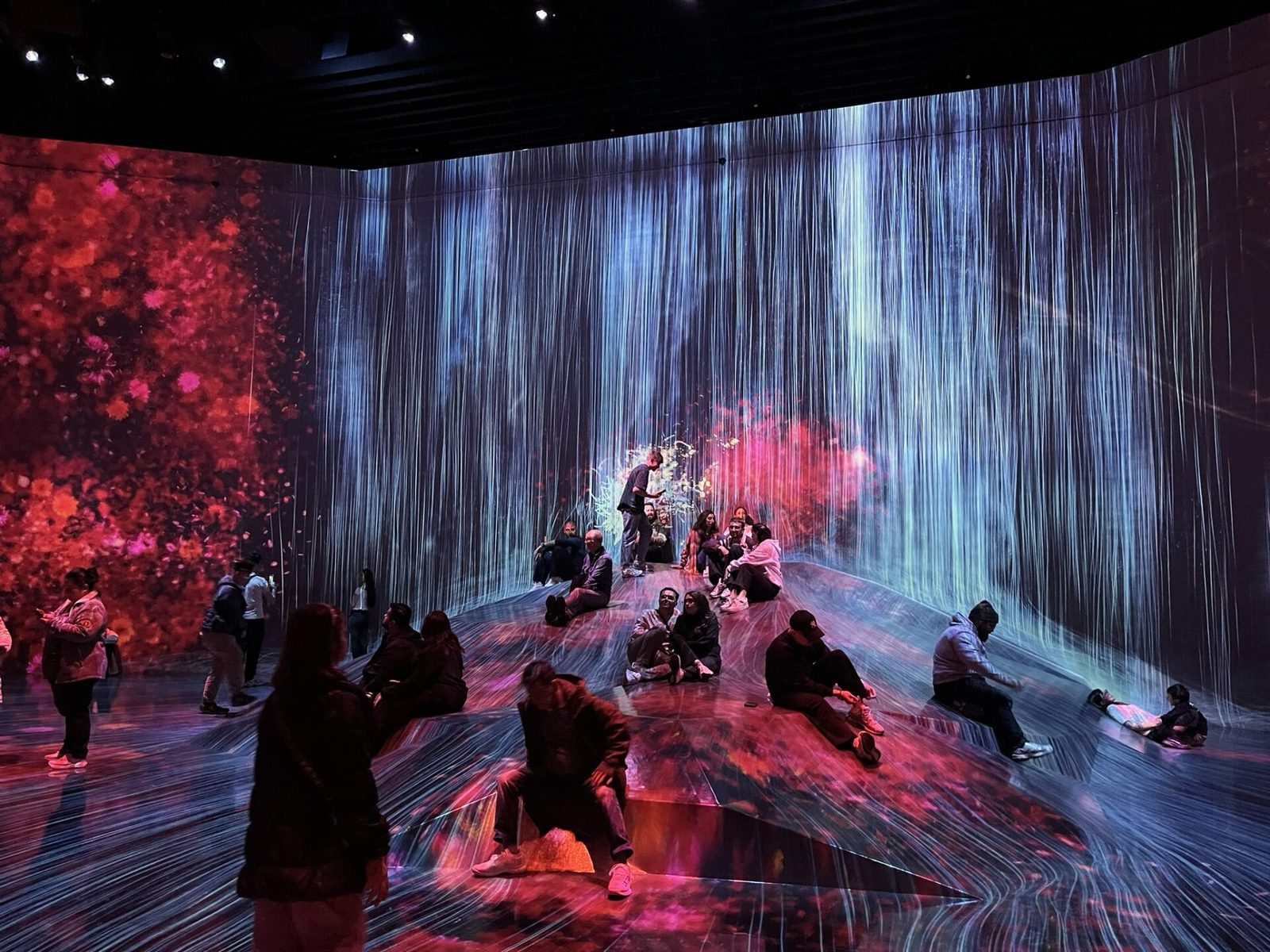
An immersive space uses multiple blended projectors to wrap walls, floor and sometimes the ceiling into one continuous canvas, then layers audio, lighting and interactive sensing on top, so visitors step into the picture instead of standing in front of it. Three conditions have to be true at once:
- Field-of-view wrap: imagery covers 200+ degrees of the visitor's horizontal view — four walls plus floor is the most common recipe.
- Seamless blending: overlapping projectors are edge-blended so brightness and color match across the seam, typically with a 15–25% pixel overlap band.
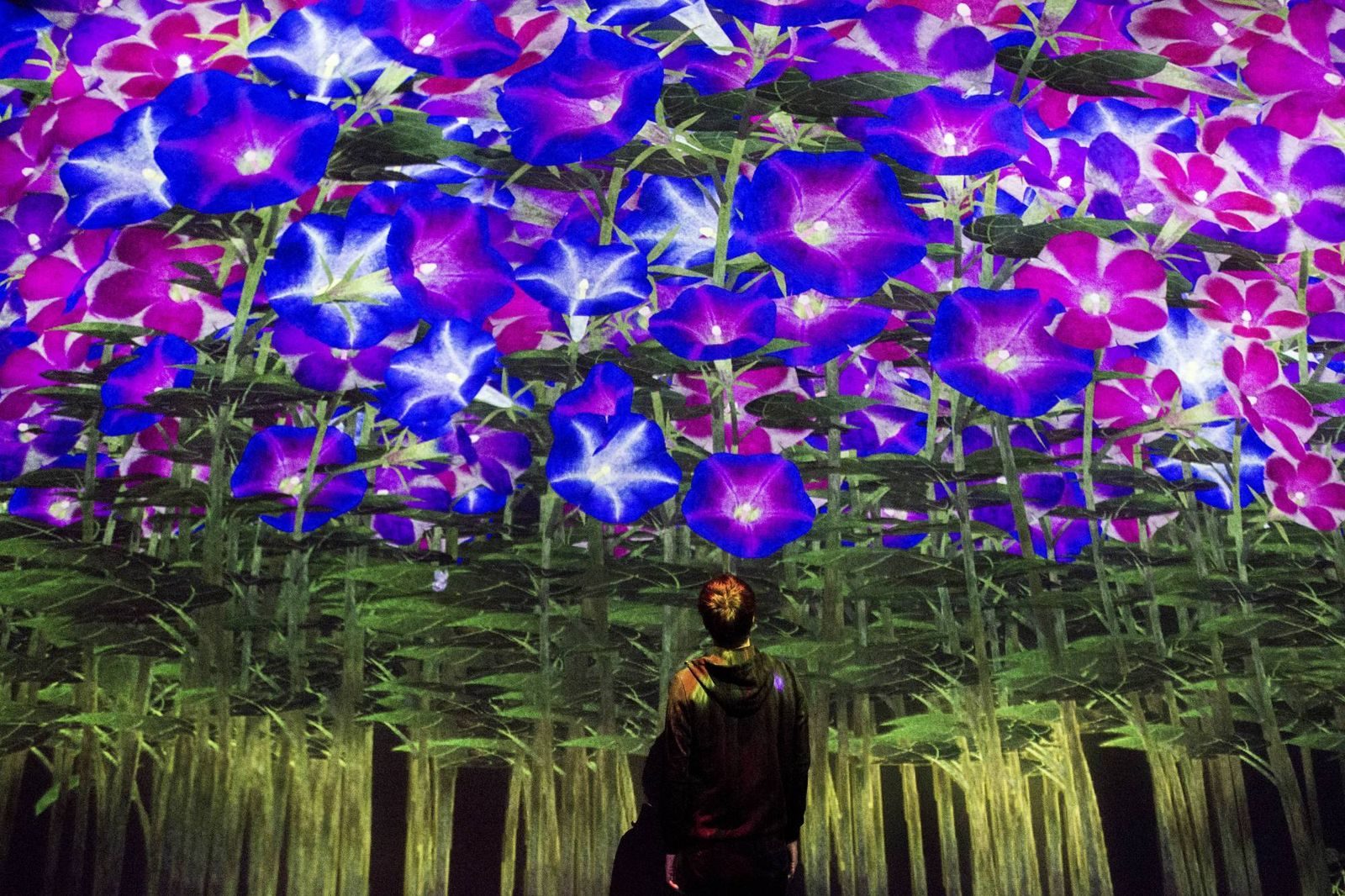
- Interaction and linkage: visitor movement changes the content in real time — flowers bloom, fish scatter, particles follow — which is what makes people share it.
Why teamLab Became the Benchmark
teamLab Borderless venues in Tokyo, Shanghai and Macau set the global standard. Epson's official case study reports that the Mori Building digital art museum in Tokyo runs roughly 470–560 Epson laser projectors across about 10,000 square meters, while the Shanghai venue uses more than 500 high-brightness laser units. The success is not hardware stacking; it is a repeatable traffic model:
- Borderless artwork. Content flows between rooms, so every visit takes a different route — a built-in reason to come back.
- Social self-distribution. Mirrored floors, flower seas and waterfalls are engineered for the camera; every visitor becomes a free photographer.
- IP plus real estate. Partnerships with Mori Building and international hotel groups turn the art into a traffic engine for malls and cultural districts.
The market agrees it works: Dataintelo sizes global immersive art exhibitions at about $2.8 billion in 2025, heading toward $7.9 billion by 2034, while China's immersive performance box office grew 37.4% in 2025 to roughly RMB 2.5 billion.
System Building Blocks and Projector Counts
| Subsystem | Components | Function |
|---|---|---|
| Projection | Multiple laser projectors, 5,000–20,000 lumens | Cover walls, floor and ceiling |
| Fusion | Fusion server or hardware blender | Geometric warping and edge blending, 15–25% overlap |
| Audio | Multi-channel amplifiers and speakers | Sound-picture sync that reinforces the wrap |
| Sensing | Radar, infrared or cameras plus gesture algorithms | Capture position and movement, drive real-time feedback |
| Content and control | Playback servers plus custom content | Licensing, scheduled updates, remote operation |
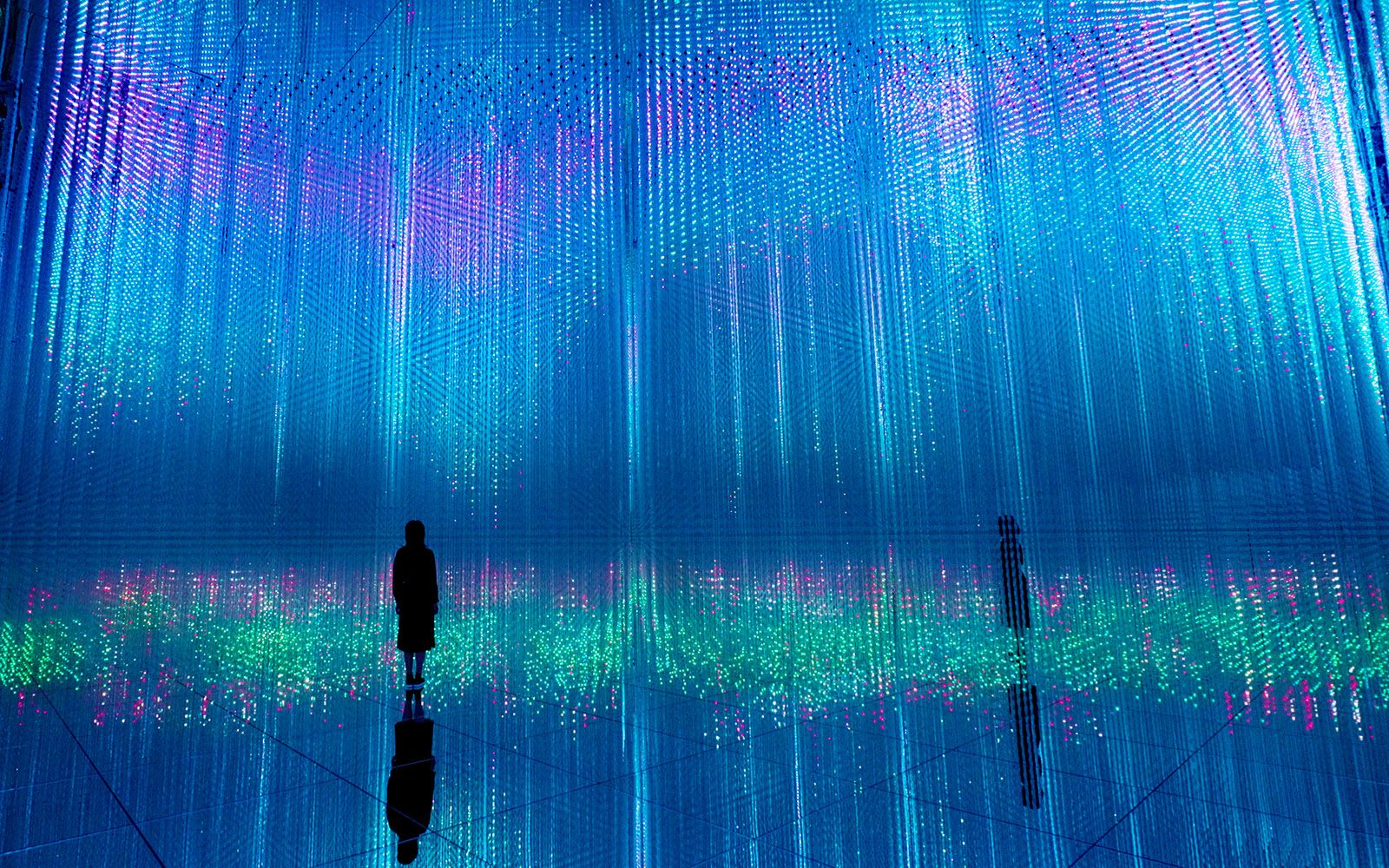
Counting rule of thumb: in a rectangular room with a 3.5–4 m ceiling, one 6,000-lumen projector covers a 6–8 m wide wall. Wrapping four walls plus the floor takes about 6–10 units for a small room, 15–30 units for a 300–500 square meter space, and 50+ units for venues above 1,000 square meters — teamLab's 500-unit halls sit at the far end of that curve. Final counts depend on ceiling height, lens throw, ambient light and image quality targets, which is why a site survey comes first.
Real Budget Ranges
Combining overseas budgeting references with current factory pricing (projection, fusion, audio, basic interaction and standard content included; civil works excluded):
| Scale | Size and form | Equipment | Budget range |
|---|---|---|---|
| Small | 50–100 m², one room, four folded walls plus floor | 4–10 units at 5,000–8,000 lm | $20,000–$60,000 (RMB 150k–400k) |
| Medium | 200–500 m², multi-wall, interactive floor, sensing | 10–30 units plus fusion server | $60,000–$200,000 (RMB 400k–1.5M) |
| Large | 1,000 m²+, full wrap, major interactive zones, custom IP | 30–100+ units | $200,000–$800,000+ (RMB 1.5M–6M+) |
Unit economics behind the table: a 5,000–8,000 lumen laser projector runs roughly $3,000–$8,000 per unit, the 20,000-lumen engineering class costs tens of thousands, fusion and playback servers are extra, and custom content — priced per second or per scene — is usually the most elastic line in the budget. Overseas references put commercial-grade immersive spaces at $200,000–$600,000 overall, with high-end multi-zone venues using motion capture exceeding $750,000.
Three Reference Projects Worth Studying
- teamLab Borderless (Tokyo / Shanghai): 10,000-square-meter halls running 500-unit projector fleets — proof that borderless content plus social distribution scales.
- Arte Museum by d'strict (Korea): "Eternal Nature" media-art galleries replicated quickly in Las Vegas and Dubai — the template for medium-sized multi-room matrices.
- Pingyao Ancient City Sci-Tech Art Museum (China): a dome light show built with just 16 projectors, layering digital narrative onto a heritage setting — the representative "old site, new content" play.
Three practical rules before you sign anything. First, work backwards from revenue: price tickets, secondary spend and footfall, then size the room to what the business can carry — 200–500 square meters is the safest starting scale. Second, write content freshness into the contract with quarterly updates or a subscription clause, because social media novelty decays fast. Third, remember the site survey decides roughly 30% of the final cost; ceiling height, ambient light, power and structure change the equipment list more than any brochure does. Send us your room dimensions and photos — Aurora Vision will return a projector count, a layout drawing and a budget band within 24 hours.