Interactive Projection Market Trends 2026: Key Data
The global interactive projector market is compounding at 21.73% a year while consumer volume shrinks. The 2026 data, tech shifts and buying windows that matter for B2B buyers.
If you are planning an exhibition hall, a night-tourism route, a family entertainment center or a retail activation, 2026 is a year the interactive projection business deserves a hard look: the global market is compounding at roughly 21.73% annually, and China's immersive performance box office grew almost 40% in a single year. Below is the verified data behind the headline numbers, five technology shifts that change what you should procure, and the four application directions where overseas buyers are actually spending — so you can judge whether now is your entry window and where the budget should go first.
The Market in Numbers: 21.73% CAGR
Start with the core figure. According to Fortune Business Insights, the global interactive projector market reached roughly US $4.56 billion in 2025, is expected to hit about $5.55 billion in 2026, and is projected to grow to $26.75 billion by 2034 — a compound annual growth rate of 21.73%. Even against the more conservative 11–18% CAGR forecasts from other research houses, this remains one of the fastest-growing segments in the display industry.
Regionally, 2025 demand splits into roughly $825 million in the United States, $702 million in Europe and $600 million in China. North America's lead comes from replacement cycles in classrooms and meeting rooms; China and Asia-Pacific grow on new-build demand from night tourism, commercial complexes and entertainment venues. For overseas buyers, one implication is simple: sourcing interactive projection equipment from Chinese supply chains will keep getting more common, not less.
A Split Market: Consumer Down, Professional Up
Inside the same "projection" industry, two opposite cycles are running at once — and this is the point buyers most often misread.
- Consumer volume is shrinking. China shipped 6.89 million projectors in 2024 and is expected to fall to about 5.83 million in 2025, down roughly 15.4%. Home micro-projector price wars keep thinning margins.
- Professional installation demand is growing against the trend. Global projector shipments are forecast at about 22.08 million units in 2025 (+9.5%), with revenue crossing $10 billion for the first time — fewer boxes, higher value. High-brightness laser projectors, fusion servers and interactive content packages are the profit engines.
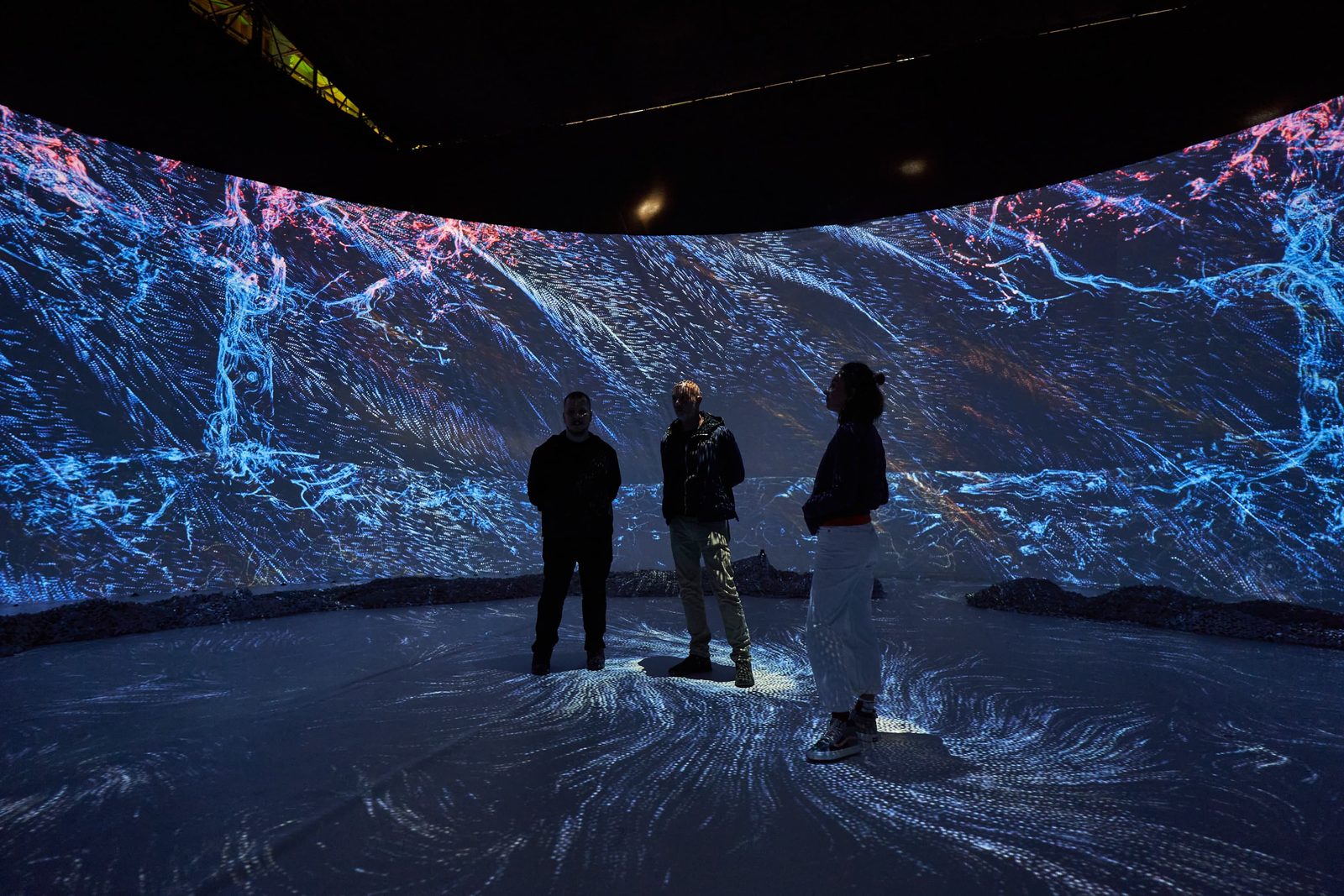
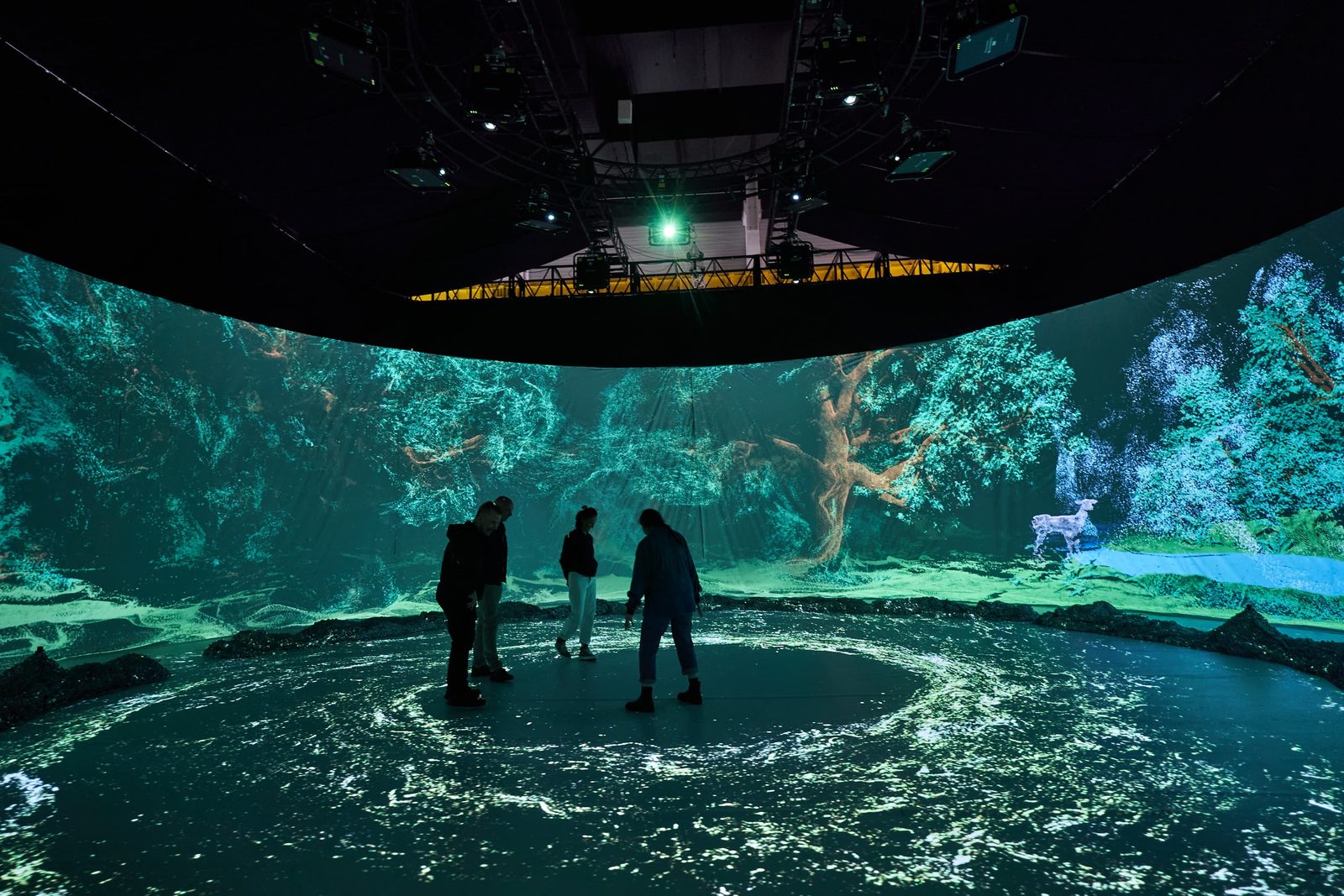
- Immersive content is exploding. China's immersive live-performance box office grew from about RMB 1.82 billion in 2024 to roughly RMB 2.5 billion in 2025, up 37.4%. At the 2025 Light and Shadow Performing Arts conference in Guangzhou, 300-plus cultural tourism experts converged on the same conclusion: the industry is moving from "light shows" toward "immersive theatre" that wires live actors into interactive technology.
The buying lesson is blunt: stop benchmarking installation projects against consumer-projector prices. In interactive projection the budget lives in brightness class, sensing hardware and content — the projector itself is only the carrier.
Five Technology Trends That Affect Your Spec Sheet
- AI-generated real-time content. Flower seas, ink-wash landscapes and galaxy scenes are being replaced by AI content that evolves with visitor movement; delivery shifts from buying clips to training scene models.
- Laser light sources everywhere. The 20,000-lumen engineering class keeps dropping in price, and 20,000+ hour source lifetimes remove lamp replacement from the lifecycle math entirely.
- More lumens, smaller bodies. Wider-angle lenses and compact chassis let a restaurant private room or a boutique achieve the wrap-around feel that used to require a large hall.
- Radar-plus-vision sensor fusion. Single infrared sensing is giving way to radar + camera + gesture algorithms with far better ambient-light rejection, so outdoor plazas and bright atriums trigger reliably.
- Content as a subscription. Seasonal and campaign content pushed from the cloud each quarter moves owners from one-off purchases to annual subscriptions — and keeps attractions from going stale.
Four Application Directions Through a Buyer's Lens
| Application | 2026 demand pattern | Typical build | Buyers scrutinize |
|---|---|---|---|
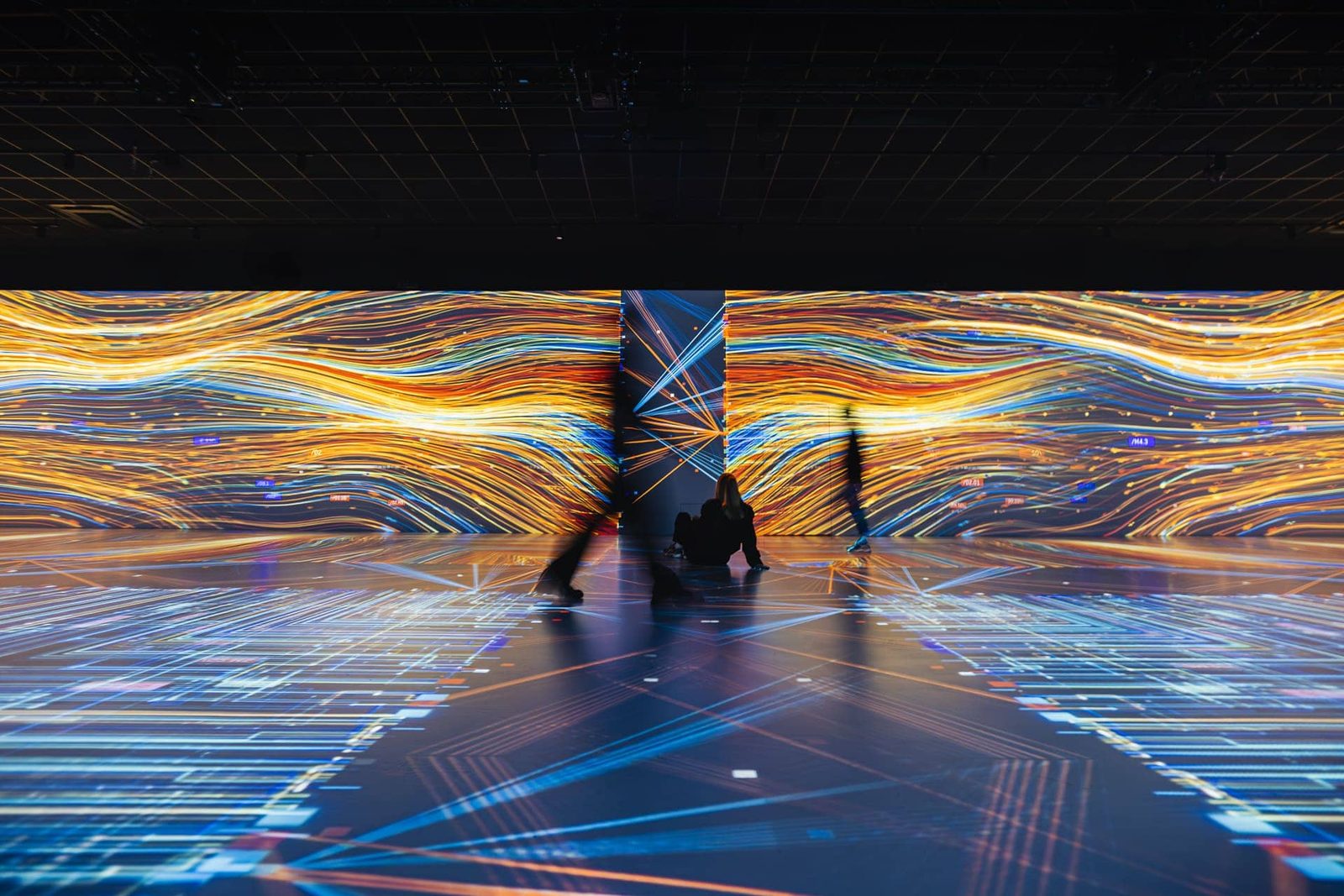
| Night tourism | From floodlighting to content economics; immersive theatre with live NPC interaction | Facade 3D mapping, dome shows, interactive light trails | Content update capability, outdoor protection, acceptance standards |
| FEC and kids' play | Replay rate of hit attractions decides the payback period | Interactive slides, ball-smash games, floor game arrays | Safety certification, sensing latency, game count and updates |
| Commercial spaces | Traffic plus dwell-time operation, seasonal theme swaps | Atrium interactive floors, gesture shopfronts, photo walls | Rent vs buy, deployment speed, social media reach |
| Education and enterprise | Replacement of teaching and meeting stock, steady multi-region growth | Interactive teaching all-in-ones, collaboration projection | Brightness under ambient light, touch accuracy, service network |
How We Suggest Positioning for 2026
- Fix the scenario before the spec sheet. On the same budget, night-tourism projects should weight content and sensing, FECs should weight durability and game count, and retail should weight deployment speed and theme updates.
- Price the whole lifecycle. Put 20,000-hour laser sources, content subscription fees and sensor recalibration into your comparison table instead of comparing bare unit prices.
- Catch the professional-segment window. As consumer volume drains away, supply-chain capacity is shifting toward professional hardware and interactive modules — 2026 is a good year to lock in factory agreements and long-term pricing.
2026 rewards buyers who treat interactive projection as equipment plus content plus operation, not a one-time hardware purchase. Planning an exhibition hall, a night-tour route or an FEC expansion? Send us your project brief or floor plan — Aurora Vision engineers will come back with a budget range, an equipment list and the closest reference cases within 24 hours.