Interactive Sports Entertainment: Trampolines to Ball Walls
Exergaming turns trampolines, courts and runways into game controllers. Specs, price ranges and operating plays for FEC owners, gyms and youth training venues.
Trampoline jumps trigger the game, shots into a projected wall rack up points, a chase across the floor is scored in real time. Interactive sports entertainment — exergaming — is the fastest-upgrading corner of the FEC and fitness market, because it fixes the two problems every venue shares: pure hardware (trampolines, shooting machines, treadmills) loses novelty month by month, and casual visitors have no reason to train again. Gamify the movement and both gaps close at once.
Why Venues Are Gamifying Movement
Projection plus sensing maps every jump, shot and sprint onto a score. That changes three things for an operator. First, zero threshold: you do not need to be sporty, you just need to play. Second, a reason to return: leaderboards, level unlocks and seasons give members a "next week" motivation. Third, measurable workload: the backend records repetitions, scores and durations, which is the data foundation for running courses instead of open play. The category leader MultiBall ships a wall with 45+ games played with real balls and real body movement, and interactive walls and trampolines are now standard fit-out lists for chains across the FEC and youth-training market.
Five Formats That Work
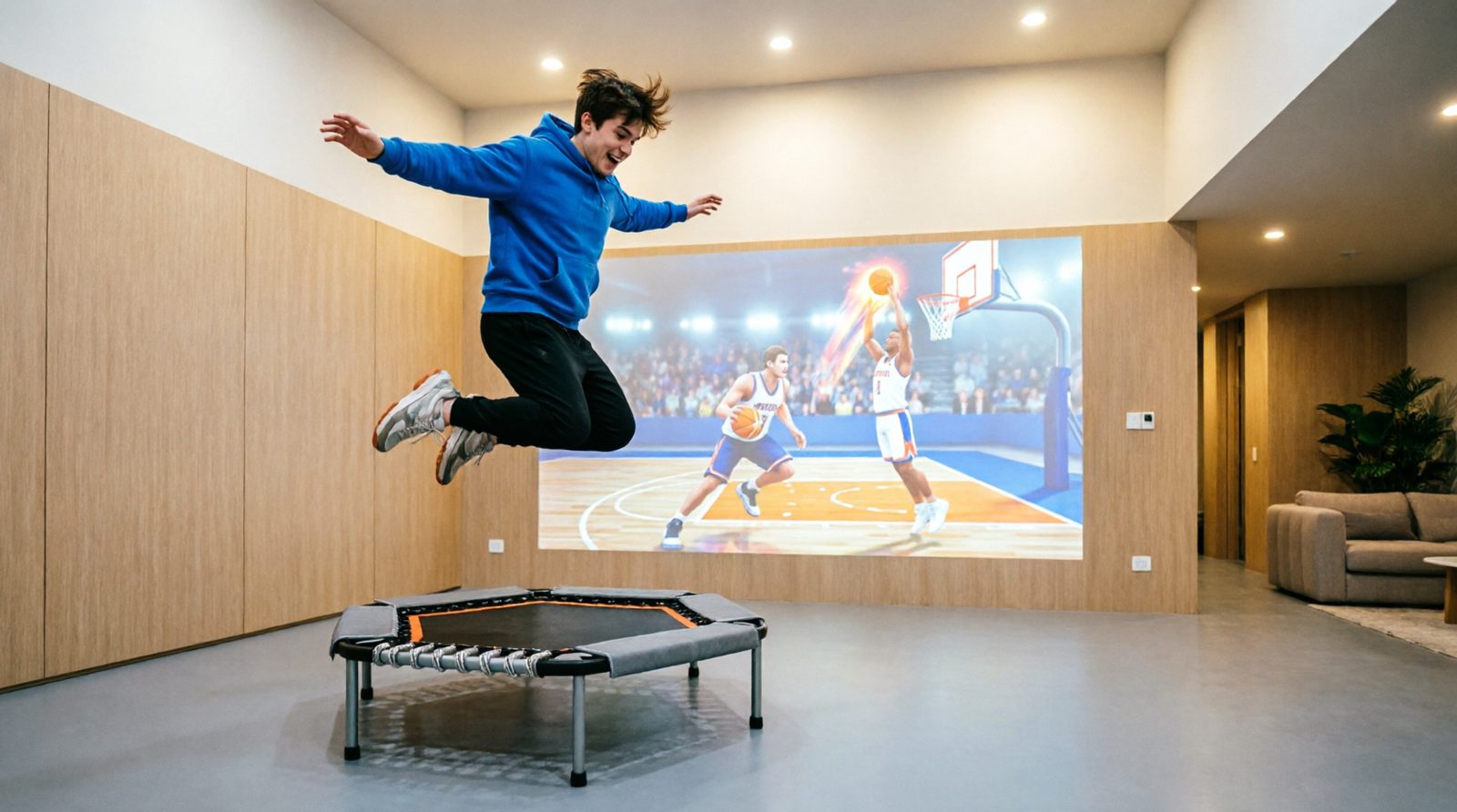
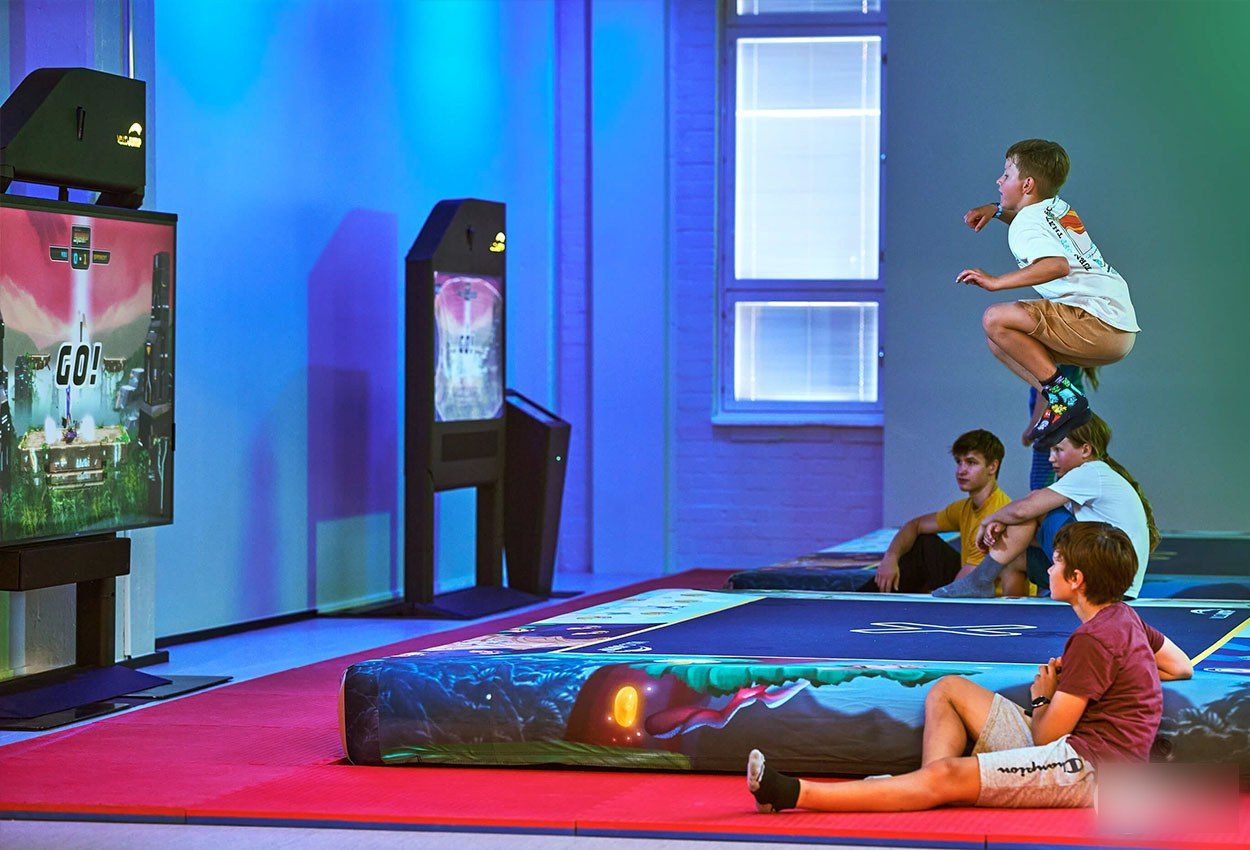
Interactive trampoline. Games projected on the wall or floor of the trampoline zone, with jump sensing (camera or pressure) turning every bounce into a controller: dodge obstacles, stomp monsters, collect stars. Products like ValoJump pair a trampoline with a big screen and AR scoring. It becomes the park's premium photo-worthy spot, monetized per play or inside the pass.
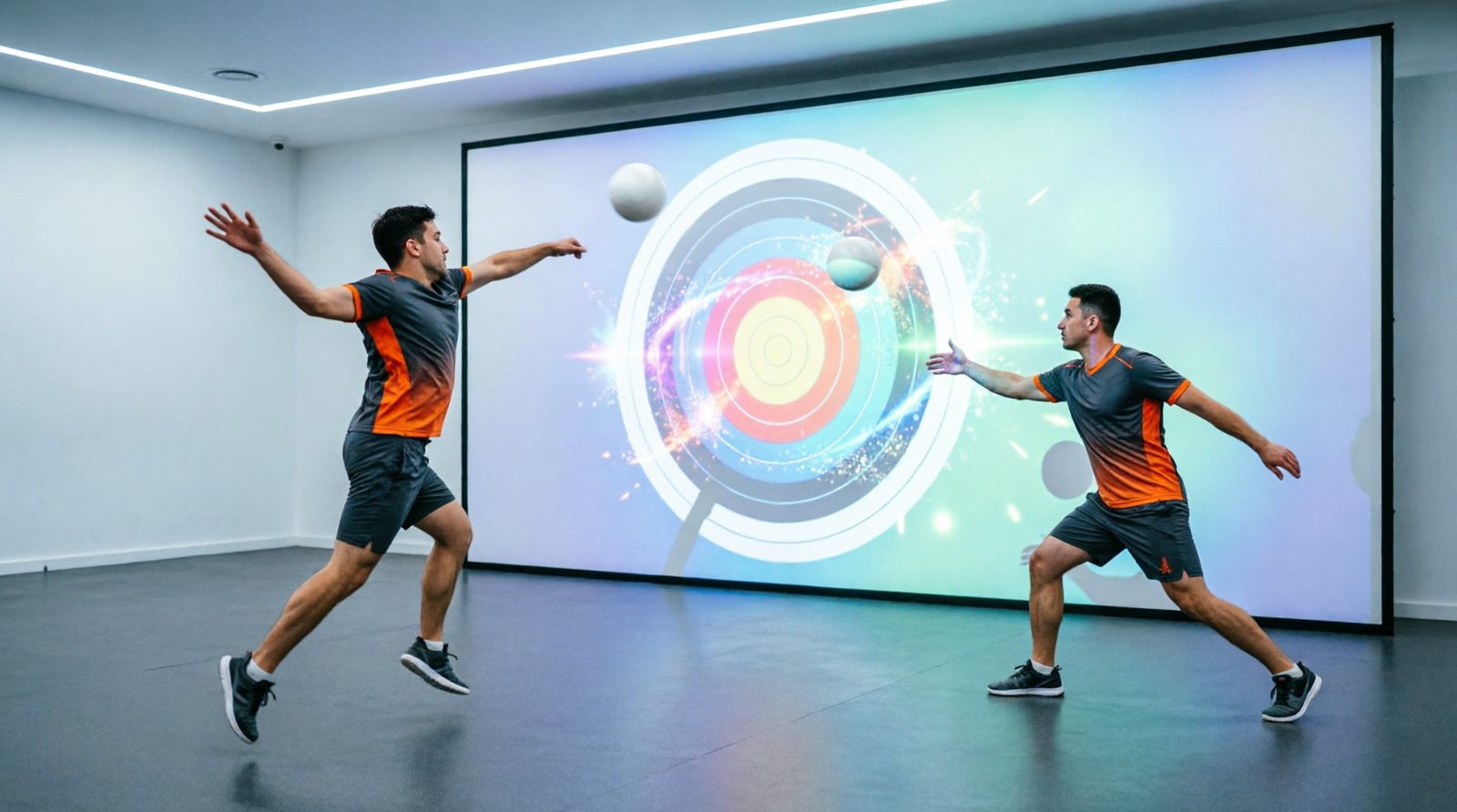
Interactive soccer wall. The wall shows goals and target zones; players shoot real balls and cameras score the impact live, with goalkeeper animations and combo streaks. Training modes add passing targets and reaction drills, which is why youth academies run winter indoor programs on it. Commercially this is the most mature interactive sports category.
Interactive basketball. Projected target rings move and shrink under a timer, with multiplayer head-to-head and rankings. Against a static shooting machine, fresh visuals and rules keep the challenge new.
Parkour floor array. Floor-projected chase, hopscotch and dodge grids driven by motion cameras — the "movement challenge zone" of kids' sports halls and large FECs, strongest with ages 4–12.
Fitness mirrors and exergaming classes. For gyms and home: mirror displays with AI skeletal tracking correct your form in follow-along classes; venue versions link big-screen group classes and smart bikes, upgrading personal training into premium immersive group sessions.
Specs and Space Requirements
| Format | Sensing | Key specs | Space needed | Indicative price |
|---|---|---|---|---|
| Interactive trampoline | Jump camera / pressure | Latency under 50 ms, safety-standard trampoline | About 3×4 m per unit, ceiling 4 m+ | About $4,000–$14,000 per unit |
| Soccer wall | Ball-tracking cameras | 95%+ recognition at shots over 80 km/h | 4–6 m wide, 6–8 m deep, padded wall | About $7,000–$28,000 per set |
| Interactive basketball | Camera / IR positioning | Multi-point tracking, 0.1 s timing | Half court or 4×6 m wall | About $4,000–$21,000 per set |
| Parkour array | Motion camera / radar | Latency under 80 ms, 4–8 players | Floor 20–60 m2 | About $7,000–$35,000 per zone |
| Fitness mirror / group | AI skeletal tracking | 17+ skeletal points, live correction | Home 0.5 m2; venue 30 m2+ | Home from a few hundred USD; venue $7,000–$42,000 |
Ranges (converted from typical CNY quotes) vary widely with brand, game count and customization depth.
Making It Pay: Retention, Courses, Social
Retention. The core value is not acquisition, it is bringing members back: refresh leaderboard formats weekly, run one themed tournament a month, and the device turns from "played once" into "played always".
Courses. The soccer wall's training mode repackages directly into "interactive fitness class" or "kids' soccer onboarding" billed per session; trampoline spots host timed challenges. Because scores and repetitions are logged, progress is visible to parents — and renewals follow visibly.
Social. Score screens beg to be shared. Let players scan a code for a personal results poster and the venue buys cheap, local social media exposure with every session.
Selection and Safety Checklist
- Test latency with a real ball and a real body. Anything over 0.1 seconds between action and feedback visibly breaks the game feel.
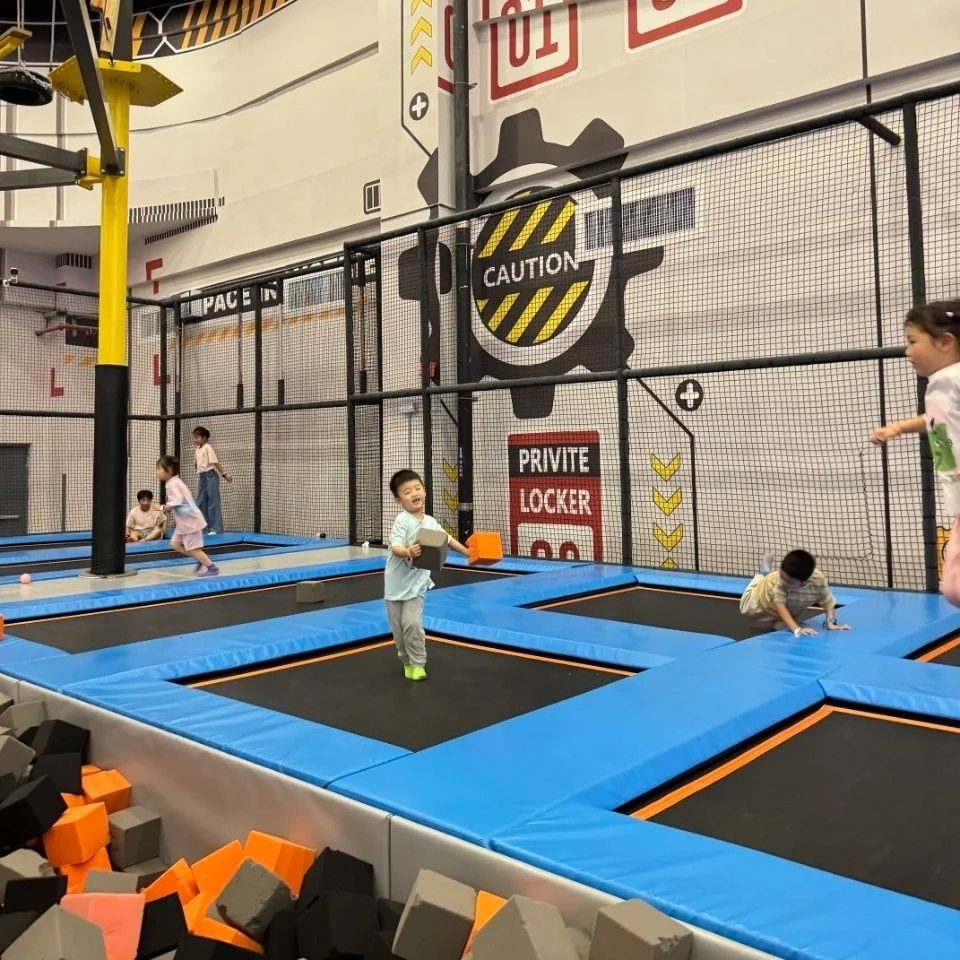
- Never cut safety buffers. Standard padding and nets stay; projectors hang outside jump trajectories with protective covers.
- Buy brightness for the hall you have. Training-grade lighting runs at 300+ lux, so start at 6,000 lumens or use a hybrid high-brightness screen / LED backdrop.
- Check the game license. Confirm how many games are built in, how updates arrive and for how long — avoid owning a wall with three games.
- Spec for abuse. Padded walls and sensor positions must take hits and wipe clean; acceptance-test at 500 visits per day.
Aurora Vision supplies interactive trampolines, ball-sport walls and game content to overseas FECs, fitness chains and youth training academies. Send us your hall dimensions and ceiling height and we will spec a configuration with a per-play revenue model.