LED Dance Floor vs Interactive Projection Floor: Which Should You Choose?
Both make floors come alive — but they suit different budgets, venues and shows. An honest comparison from a factory that builds both.
Two Ways to Light Up a Floor
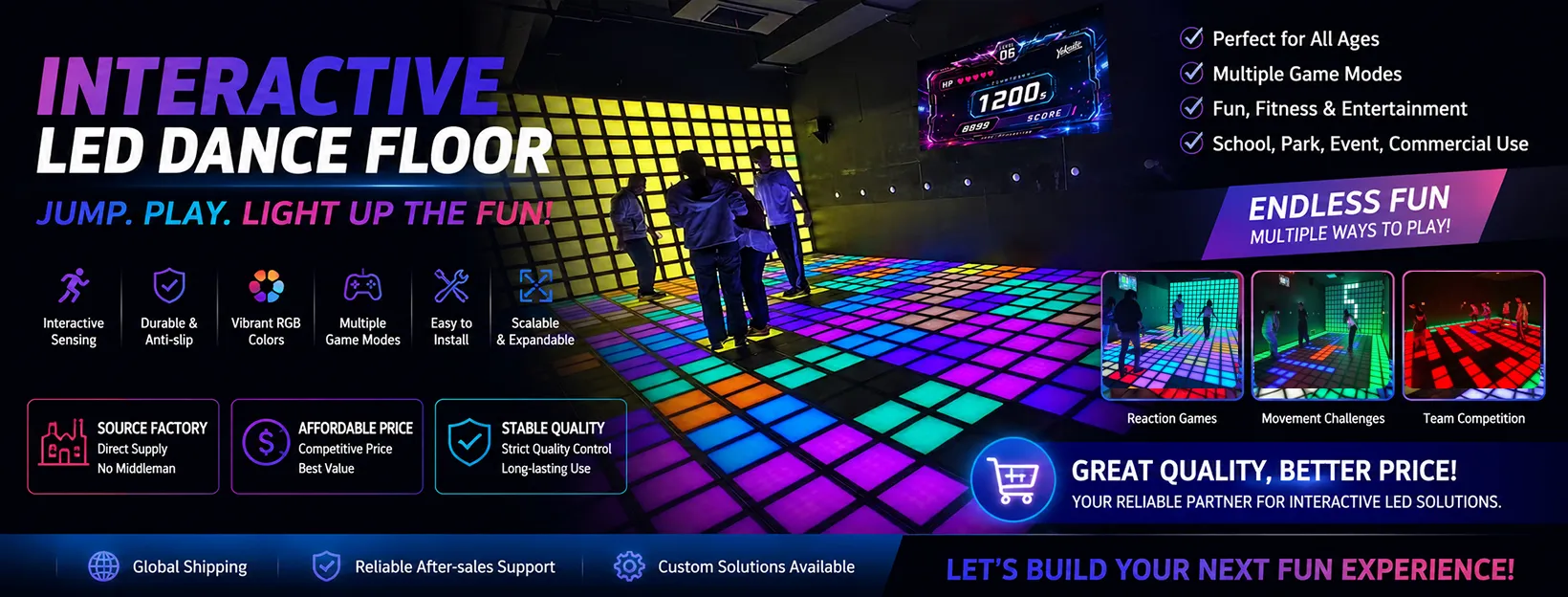
LED dance floors are physical tiles: each tile contains LEDs and sensors, glowing from under a tempered surface. Interactive projection floors use an overhead projector plus infrared sensing to cast reactive scenes. Both react to people — the difference is everything else.
Effect Style
LED tiles deliver saturated, high-impact pixel animation — perfect for stages, clubs and music-synced shows where the floor is the light source. Projection delivers imagery: fish, flowers, games, text — richer scenes, softer light, better for play and storytelling.
Cost Structure
- LED floors: price scales with area (per-tile), so large floors get expensive — but they thrive in the highest-wear spots
- Projection: one unit covers ~7 m² from $450, making large play areas dramatically cheaper; very large areas use multi-unit fusion
Environment
LED tiles handle ambient light and foot traffic without debate — clubs and stages love them. Projection prefers controlled lighting; in bright daylight it needs high-brightness hardware. LED floors must be walked on safely; projection keeps the floor surface untouched — no edges, no seams, nothing to trip or break.
Best-Fit Summary
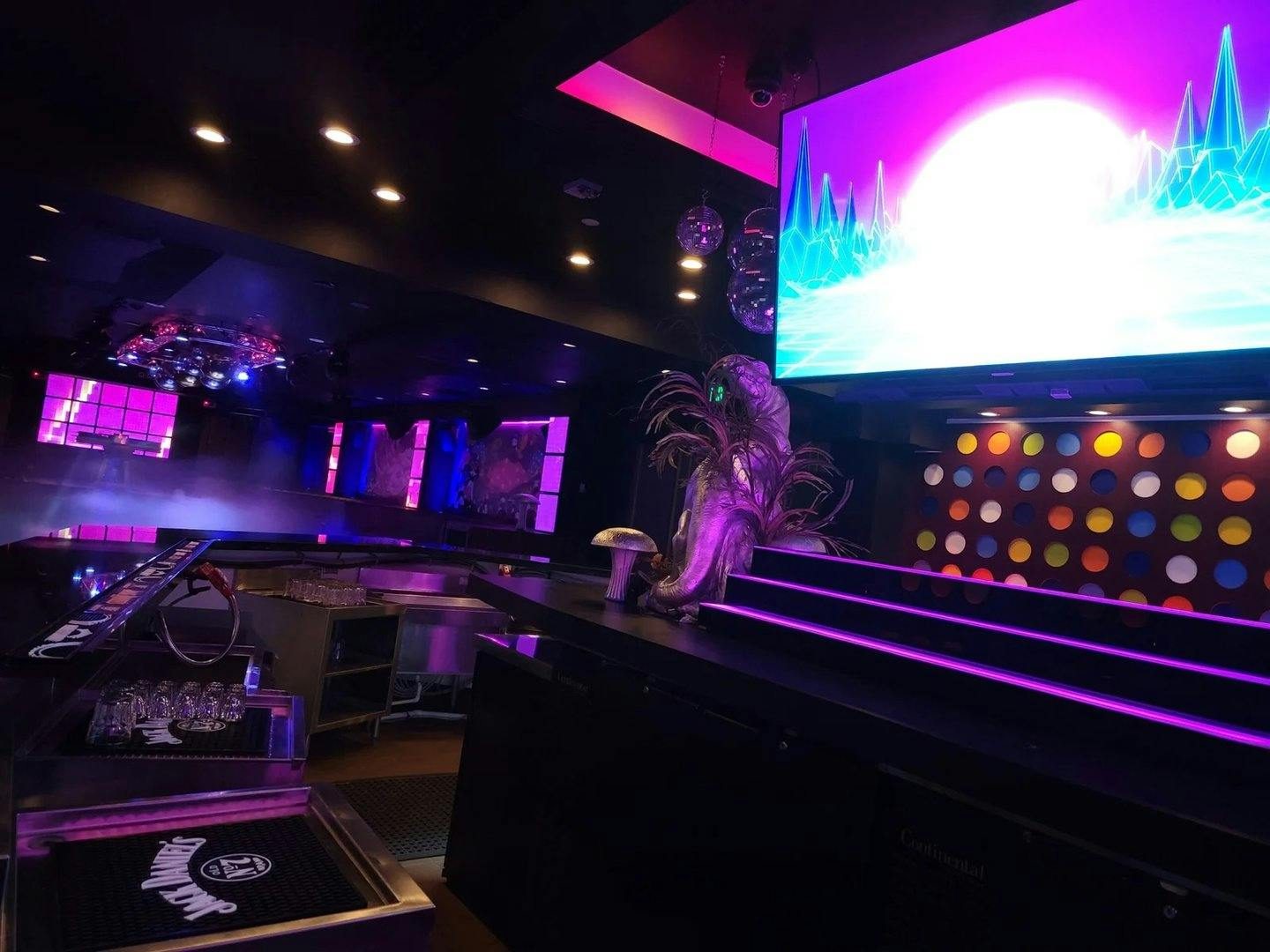
- Choose LED dance floor for: stages, nightclubs, weddings, TV studios, runway shows
- Choose interactive projection floor for: FECs, kindergartens, exhibitions, sensory rooms, brand activations
- Use both when the floor is both a stage and a playground — we deliver hybrid venues regularly
We manufacture both — see our LED floor or our projection system, or ask us which fits your venue.