Interactive Installations for Shopping Malls: ROI Playbook
Five interactive installation types that pull mall traffic, what each costs, how to measure return — and the rent-versus-buy math that settles the budget debate.
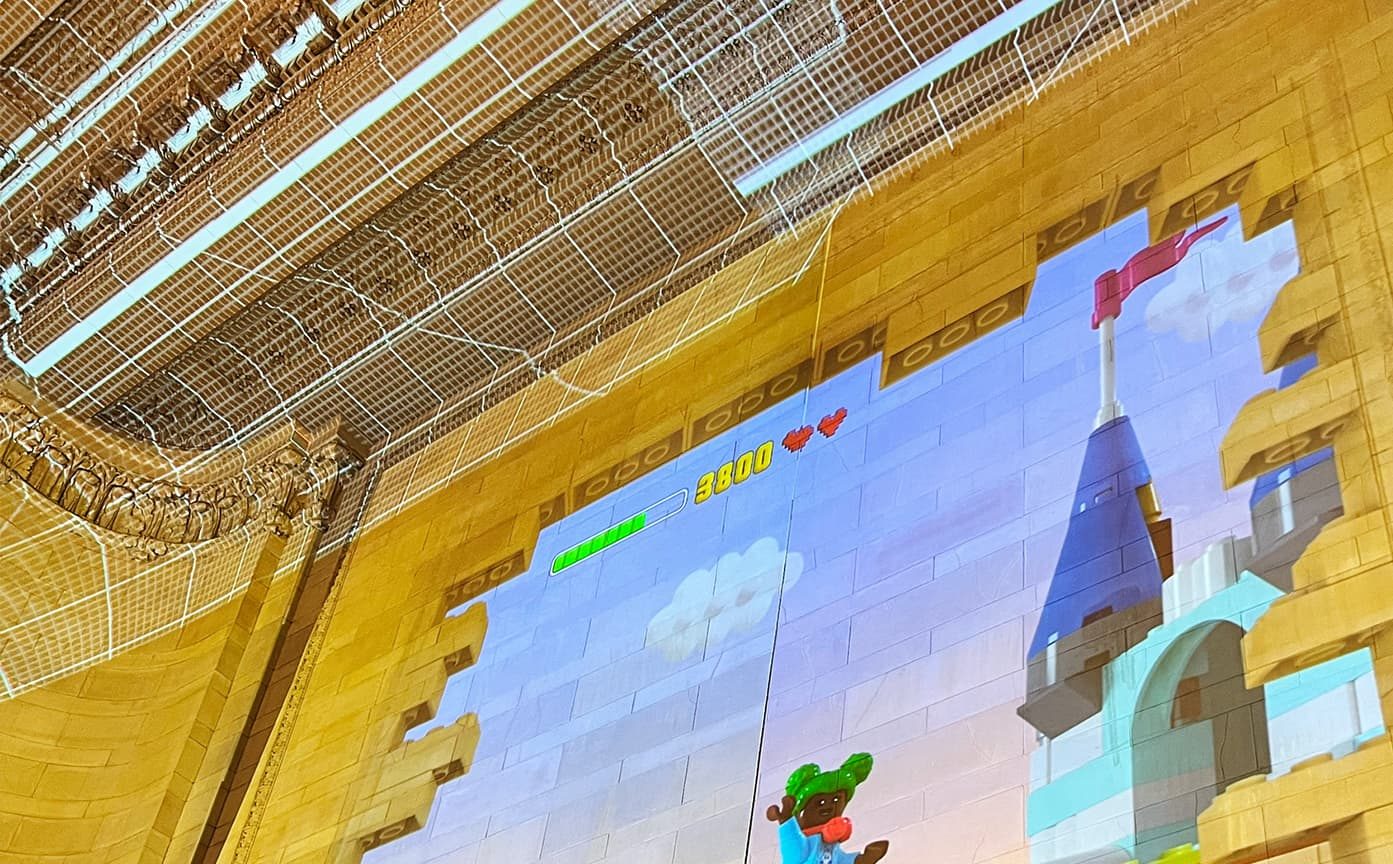
A fish wall in the atrium that scatters as children run past; a floor that blooms under every footstep. Shopping centers worldwide are shifting decor budgets toward interactive installations — the interactive projection market alone is forecast around USD 5.55 billion in 2026 with roughly 21.7% annual growth — because a sculpture earns a glance while an installation earns dwell time, shares and member sign-ups. This is how mall operators and event agencies put numbers on that trade.
From Looking to Staying
Static decor solves "looks nice". Interactive installations solve "takes part", and the value chain operators care about is short: dwell time, then photo and video sharing, then conversion into the mall. A visitor in front of a responsive surface stays tens of seconds to minutes — versus a one-second glance at a sculpture — and the clip they shoot is free advertising with the mall's brand in frame. The third link is the one most operators miss: tie the game to the membership system. Scan a QR code to log in, spend points on game credits, and foot traffic becomes a member asset you can reach again. Good interactive retail design works backwards from a commercial KPI: low threshold ( playable with no instructions), multi-age (kids play, adults film), and inherently shareable framing.
Five Installation Types and What They Cost
| Type | Spot | Interaction | Marketing goal | Indicative budget |
|---|---|---|---|---|
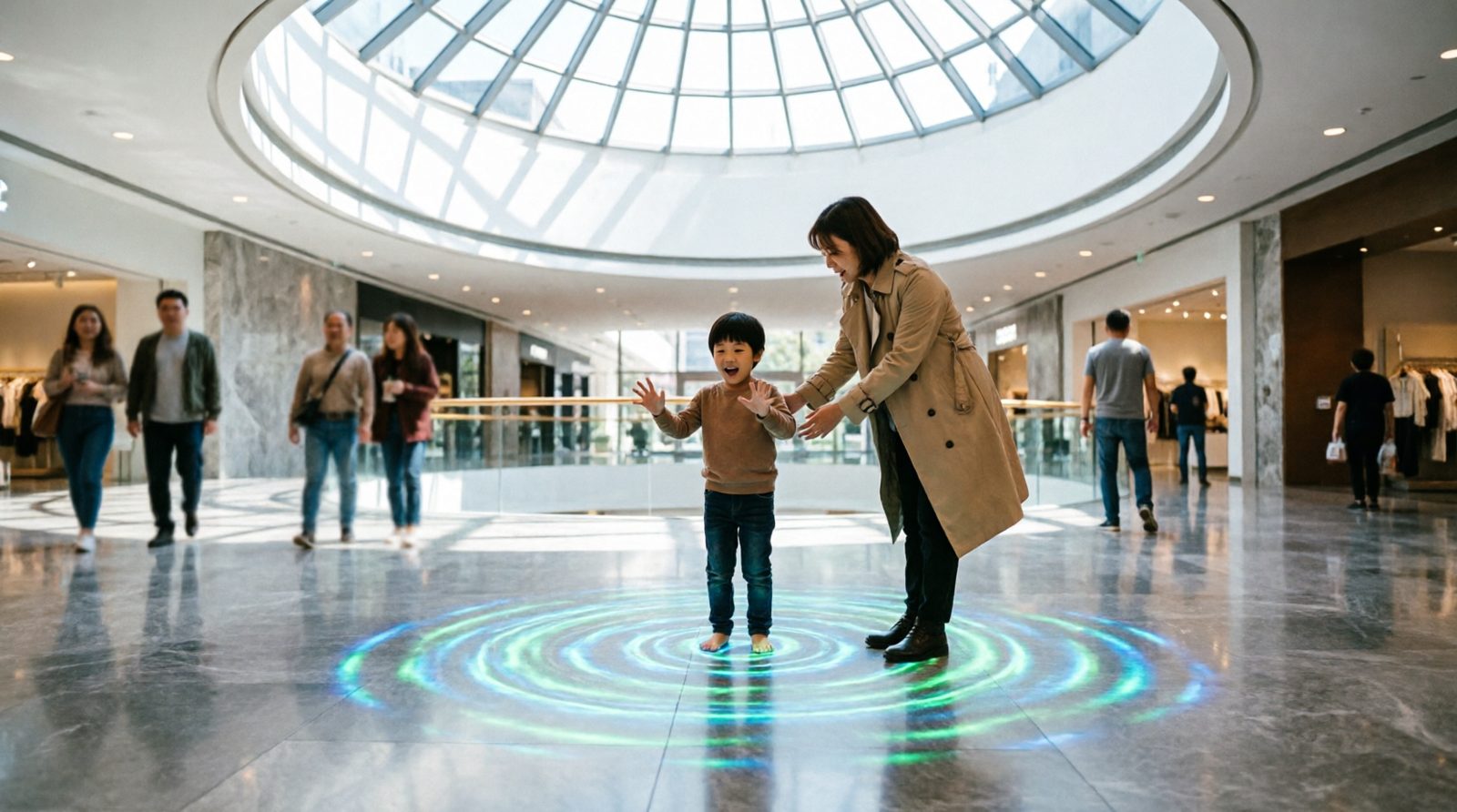
| Interactive projection floor | Atrium, main aisle | Footsteps trigger ripples, blooms, games | Traffic, family draw | About $4,000–$21,000 per point |
| Festival-themed interactive | Atrium feature spot | Gesture fireworks, wish wall, AR photos | Holiday traffic peaks | About $7,000–$42,000 per season |
| Window gesture display | Street-facing glass | Wave through the window to switch scenes | Pull customers inside | About $3,000–$11,000 per window |
| Selfie / photo-op wall | Flow nodes | Gesture-triggered animation plus share frame | Social reach | About $1,400–$14,000 |
| Membership points games | Service desk, atrium | Scan points to play lottery, slash, runner games | Member acquisition | About $4,000–$28,000 |
Ranges (converted from typical CNY quotes) cover equipment and base content; fully custom content and out-of-season extensions are extra.
Three Campaign Patterns That Work
Atrium floor plus kids-tenant redemption. One family-oriented center laid a 30 m2 interactive floor (about USD 11,000) with fish and ripples underfoot, then ran weekend treasure hunts: find the hidden chest on the floor, redeem a prize at the kids park upstairs. The floor pulls traffic; the redemption route feeds it to a paying tenant — the classic "installation serves the tenant" structure, with costs shared between the two.
Festival AR photo wall. For an anniversary campaign, a gesture wall at the main entrance fired fireworks when visitors waved and dropped them into a share frame; scanning a code delivered a personalized poster carrying the campaign hashtag. Scan-and-share counts beat the mall's concurrent paid ads, and agencies can settle on a base rental plus a bonus per share.
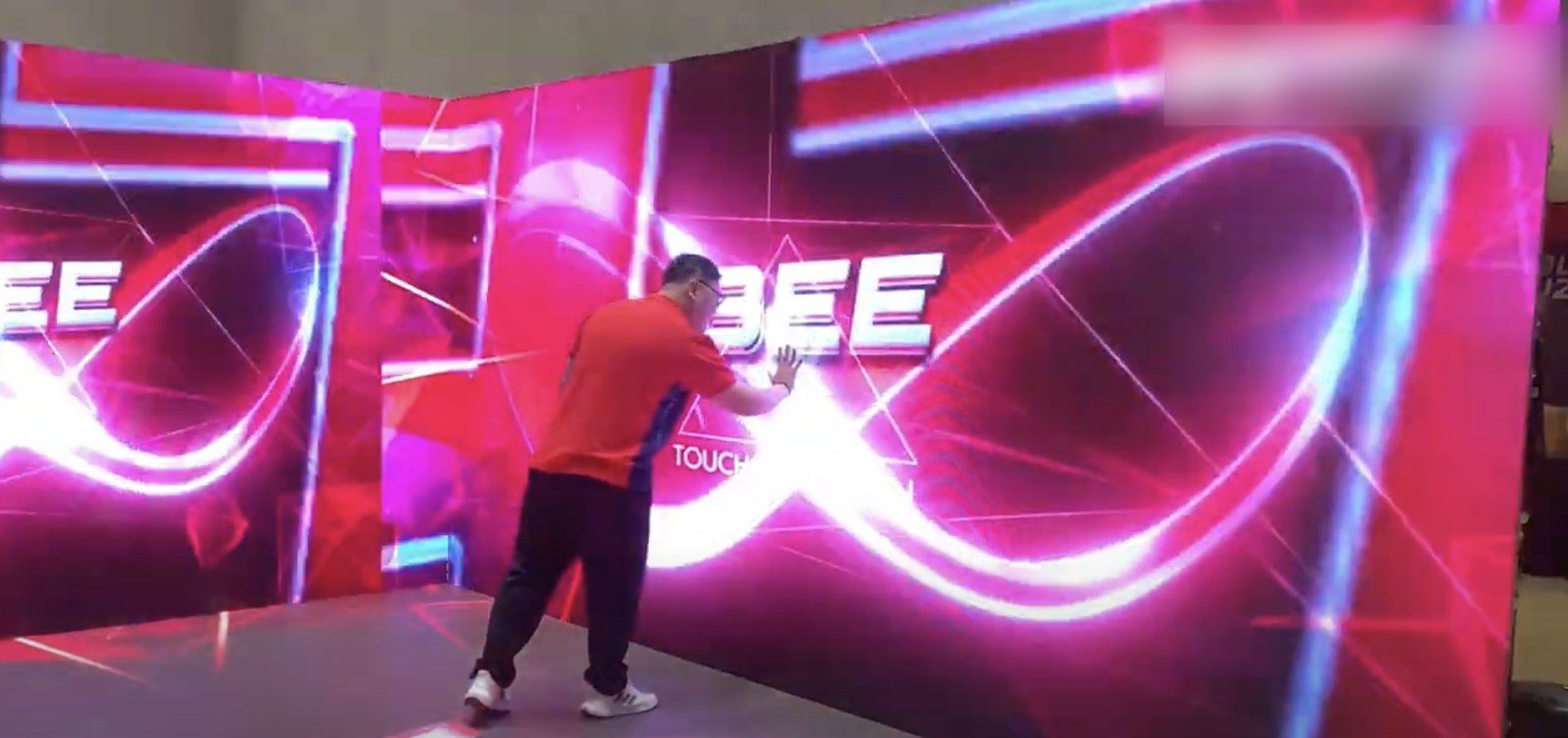
Pop-up game wall. A FMCG brand put a body-slicing fruit game on its pop-up wall: slash fruit with your arm, score decides the freebie tier. Turning "receive a gift" into "win a gift" lengthened participation and made the queue itself the ad. The same pattern transfers to car dealerships and home-furnishing showrooms.
Rent or Buy: The ROI Math
Measure return through three lenses: traffic (footfall and dwell time around the installation, quantified with IR counters), social (hashtag reach, scan-share counts, UGC volume) and business (new members, redemption rates, linked tenants' sales versus prior periods). Then settle the ownership question:
| Dimension | Short-term rental | Purchase |
|---|---|---|
| Best for | Festivals, pop-ups, opening pushes | Permanent traffic, member operations |
| Cost per use | Higher (transport and install included) | Lower once amortized |
| Content updates | Every campaign, handled by the agency | Your own system, needs an annual content budget |
| Asset | None | Redeployable across stores, depreciable |
| Rule of thumb | Up to 3 campaigns a year | Year-round operation |
The crossover sits at roughly three campaign-periods per year — past that, buying beats renting. And even after buying, sign an annual content refresh agreement: interactive installations fade because audiences tire of the content, not because the hardware fails.
Deployment Checklist for Mall Operators
- Flow beats spot. Install at "deceleration points" on the mandatory route — escalator landings, atrium edges — not in dead corners.
- Child-friendly equals traffic-friendly. Low interaction heights, rounded structures and non-slip flooring roughly double family dwell time.
- Match atrium daylight. Most atria run on natural light, so specify 5,000+ lumen projectors with a shading assessment or daytime impact drops.
- Contract the data interface. Membership integration needs the API scope and privacy responsibilities written down before launch.
- Write maintenance into acceptance. Monthly filter cleaning and sensor calibration, plus a continuous fault-free runtime criterion at handover.
Aurora Vision supplies interactive floors, walls and festival installations to shopping centers, brands and event companies worldwide, with rental or purchase programs. Send us your atrium dimensions, daylight condition and campaign calendar — we will propose the configuration and an honest payback estimate.