KTV & Nightclub Projection: Equipment Costs and Budgets
Real budgets for immersive projection in KTV rooms, bars and nightclubs: interactive tables, wall ambiance, stage motion and theme rooms, plus the licensing and music-sync traps.
Nightlife sells atmosphere, and light is the most controllable ingredient of atmosphere. For KTV rooms, lounge bars, livehouses and nightclubs, projection is the fastest way to re-skin a space — and, deployed with intent, a measurable revenue lever rather than a decoration line item. This guide lays out the four applications worth budgeting for, with equipment lists, real cost ranges and the two contractual traps that catch first-time buyers.
The Business Case in Three Numbers
First, organic reach: a craft-beer bar in Chengdu added radar-plus-touch interactive projection at its entrance — visitors walked on ripple floors and played ball games — and the check-in video passed 50,000 plays. For venues where paid acquisition keeps getting more expensive, one organic video offsets a serious ad budget. Second, spend per head: an immersive room visibly justifies a higher minimum spend and themed-session pricing, because guests arrive for the room itself. Third, repeat visits: the same hardware runs an ocean theme on Friday and cyberpunk on Saturday, which converts occasional guests into weekly ones.
The macro backdrop supports the spend: the global interactive projector market is worth about US$5.55 billion in 2026 with a 21.73% CAGR, and engineering-grade immersive installations are the segment still growing while consumer hardware declines.
Four Applications and What Each Involves
Interactive bar tables. Infrared sensing plus a short-throw projector overlaid on the counter or booth table, typically 80-100 inches: ripples spread around every glass set down, fingertips drag fireworks across the surface, and waiting time becomes social time. Entry tabletop systems start in the low thousands of CNY, with ambient-class units online from CNY 500-1,500.
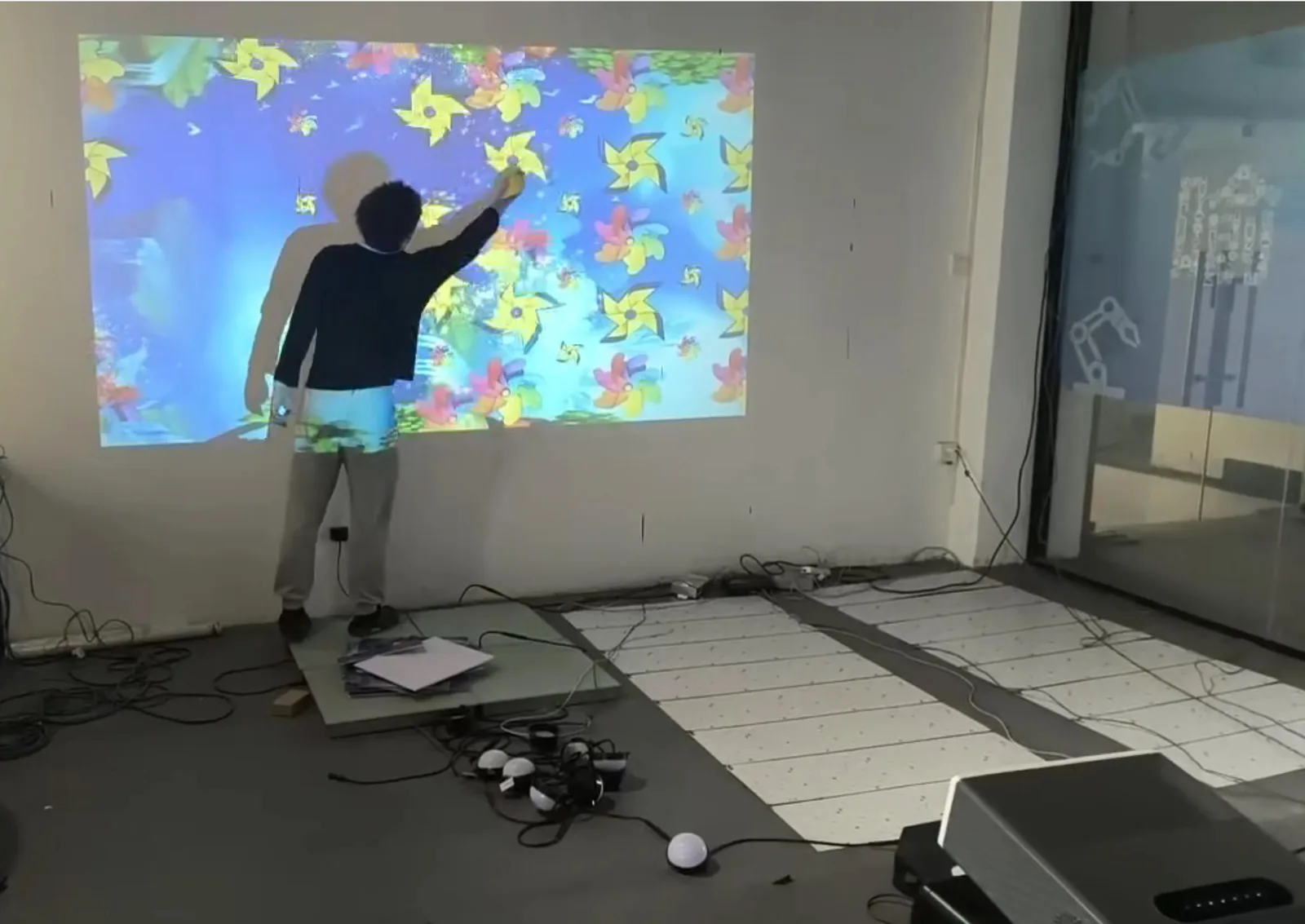
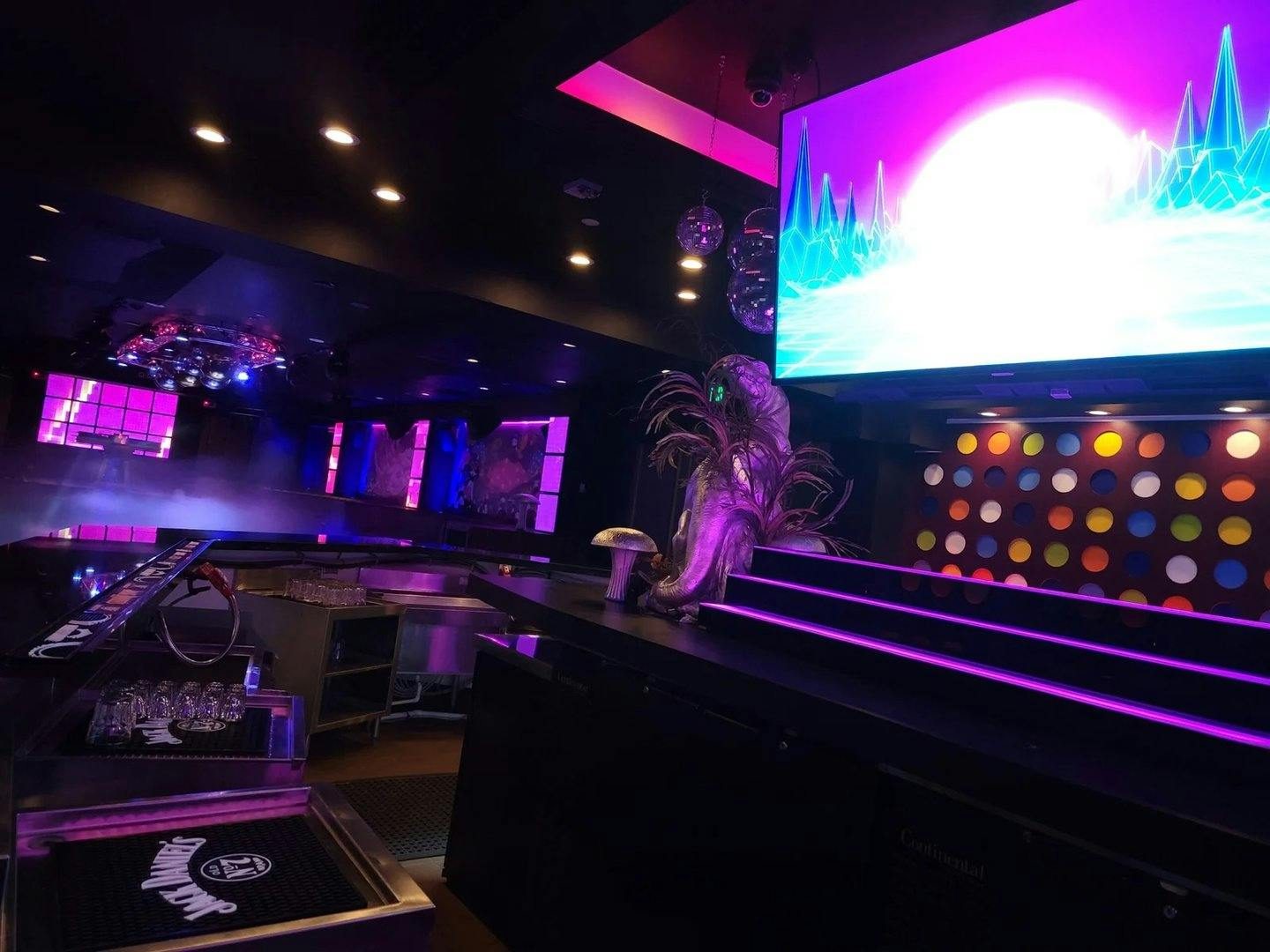
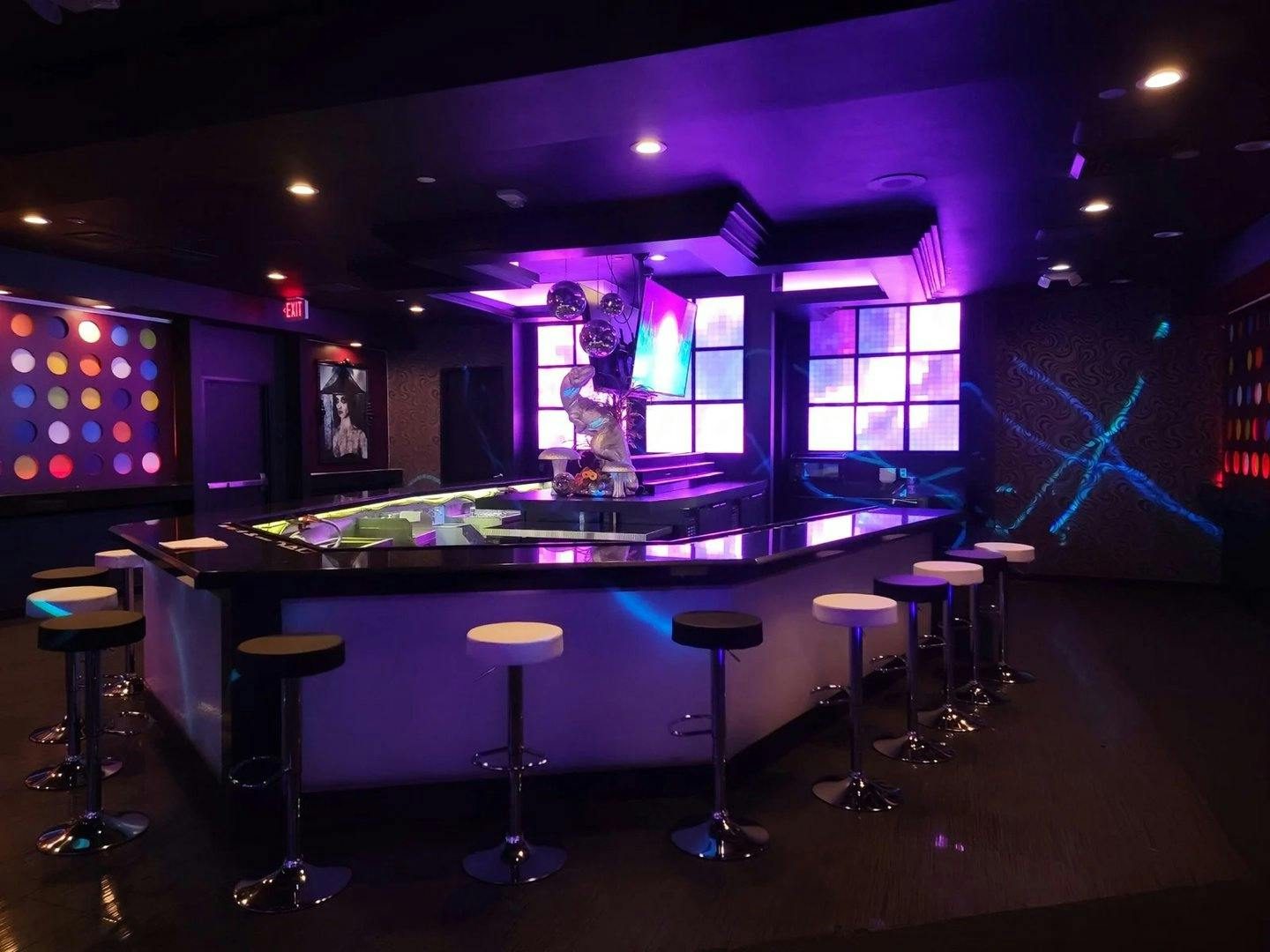
Wall ambiance. One engineering projector turns an entire wall alive — glaciers, starfields, flower seas drifting with the music. Compared with LED walls, projection wins on area, smoothness and cost per square meter, and it dims gracefully, which is why quiet bars prefer it to glowing screen arrays.
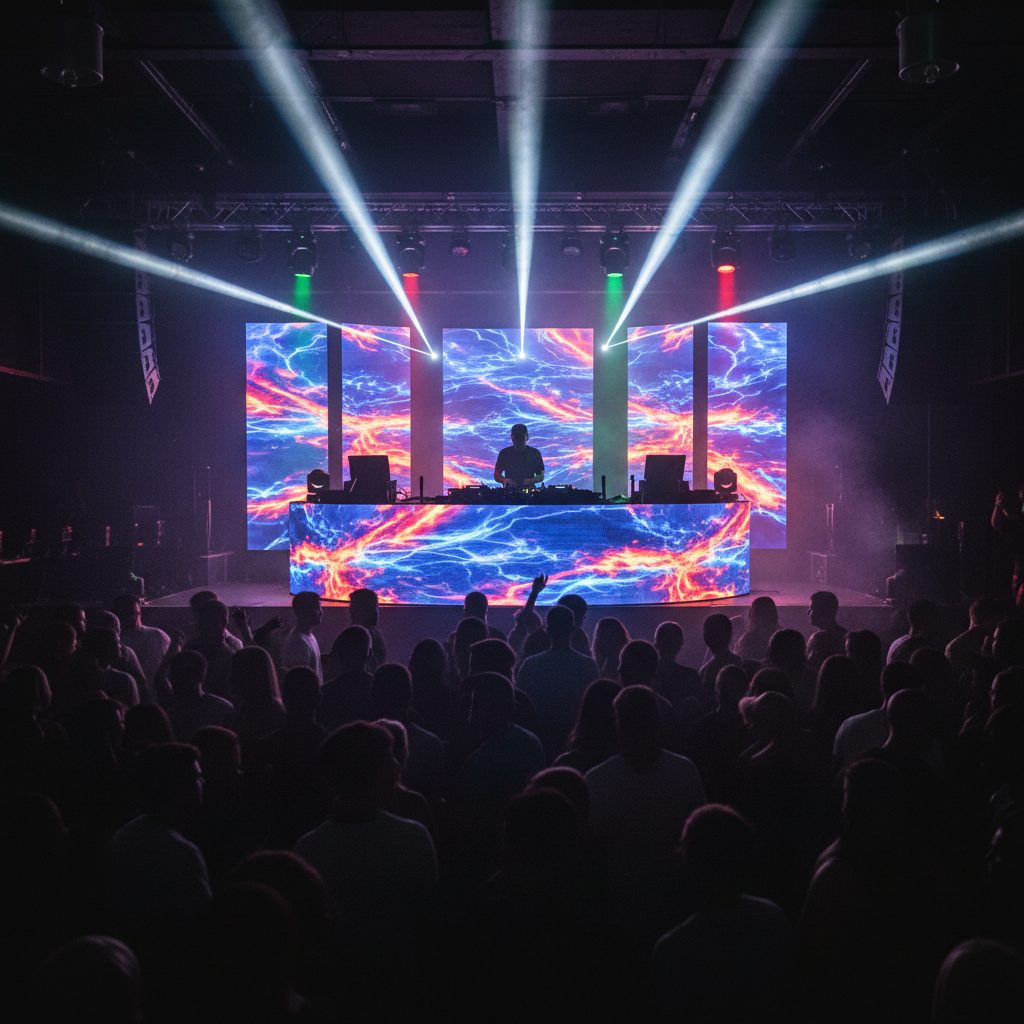
Stage and dancer interaction. Motion sensing at the DJ booth, stage backdrop or podium: particle trails follow a dancer's hand, the crowd votes on screen by raising phones, lighting pulses with the beat. It is the combination — projection or LED, fusion processing and motion cameras — that separates livehouses and clubs from ordinary bars.
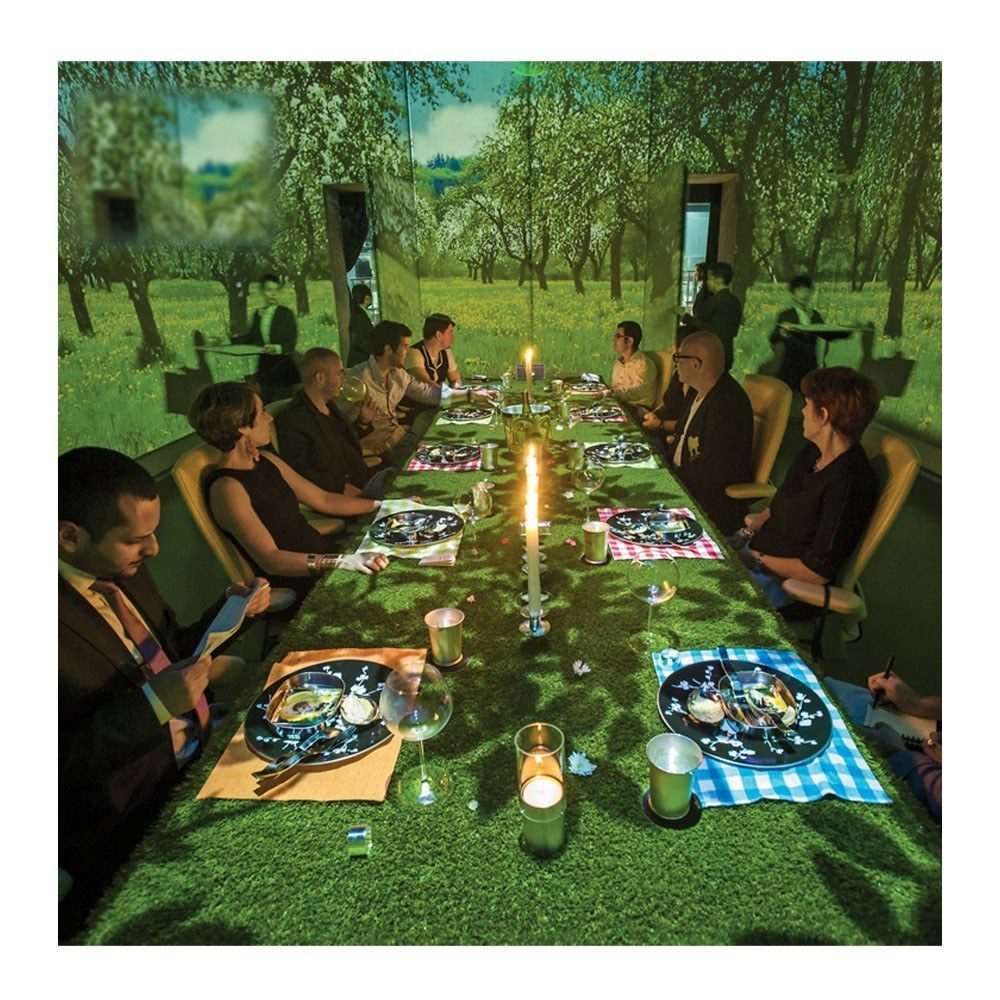
KTV theme rooms. Four walls plus table fully immersed, with scenes linked to the song catalog — a classic ballad wraps the room in starfields, an EDM chorus ignites neon. A room of about 20 sqm runs on roughly four naked-eye 3D projectors plus holographic film; projectors range CNY 2,000-35,000 per unit and imaging media CNY 1,000-2,000 per square meter.
Budget Table by Scenario
| Scenario | Core hardware | Budget range | Best for |
|---|---|---|---|
| Interactive bar table | Short-throw projector + IR sensing + host | CNY 5,000-30,000 (US$700-4,230) per table | Lounges, craft bars |
| Single-wall ambiance | One engineering projector + content host | CNY 5,000-30,000 (US$700-4,230) per wall | Quiet bars, dining bars |
| Multi-surface hall | 3-6 projectors + fusion server + audio | CNY 100,000-400,000 (US$14,100-56,300) | Nightclubs, livehouses |
| KTV theme room | 3-4 projectors + song-linked system | CNY 30,000-150,000 (US$4,230-21,100) per room | KTV chains |
| Stage interaction kit | Projection + motion camera + fusion | CNY 30,000-100,000 (US$4,230-14,100) per set | Music bars |
Cost varies mainly with three factors: projector brightness — 4,000-8,000 lumens is usually enough in a dark venue, and higher ceilings demand more — the number of blend channels, and whether content comes from a generic library or original custom production.
Two Traps: Content Licensing and Music Sync
- Licensing. Venues are commercial spaces: confirm the stock content library carries commercial-use licensing and check whether it is priced per venue. For custom content, write source-file ownership into the contract, or you are locked to the original vendor forever.
- Music sync. The best nightclub visuals are not looping files — they react to BPM and audio spectrum in real time. Confirm the system accepts live audio input (MIDI or soundcard signal) and leaves a DMX bridge to the lighting desk.
- Maintenance. Haze fluid, alcohol vapor and dust shorten optical engine life: specify sealed engines, quarterly deep cleaning, and a night-hours SLA — downtime at 11 pm cannot wait for a 10 am callback.
Rollout Advice From Live Venues
- Pilot with one accent wall plus one interactive table, then read the check-in numbers before committing to rooms and halls.
- Match content tempo to positioning: slow nature loops for lounges, high-frequency particles and glitch art for clubs.
- Split the budget roughly 60% hardware, 25% content, 15% installation and after-sales — and put annual content updates in the contract.
- For overseas projects verify 110V/220V, local noise and light-pollution rules, and produce content in the venue's languages.
Aurora Vision delivers projection hardware, licensed content and music-linked control as complete packages for hospitality venues worldwide. Tell us your venue type and size and we will send a costed starter configuration plus case videos.