Interactive Floor Projection: How It Works and What It Costs
Radar vs camera vs IR sensing, mounting height and lumen matching, the effects with the highest replay rates, and real prices from $2,500 kits to $50,000 fused fields.
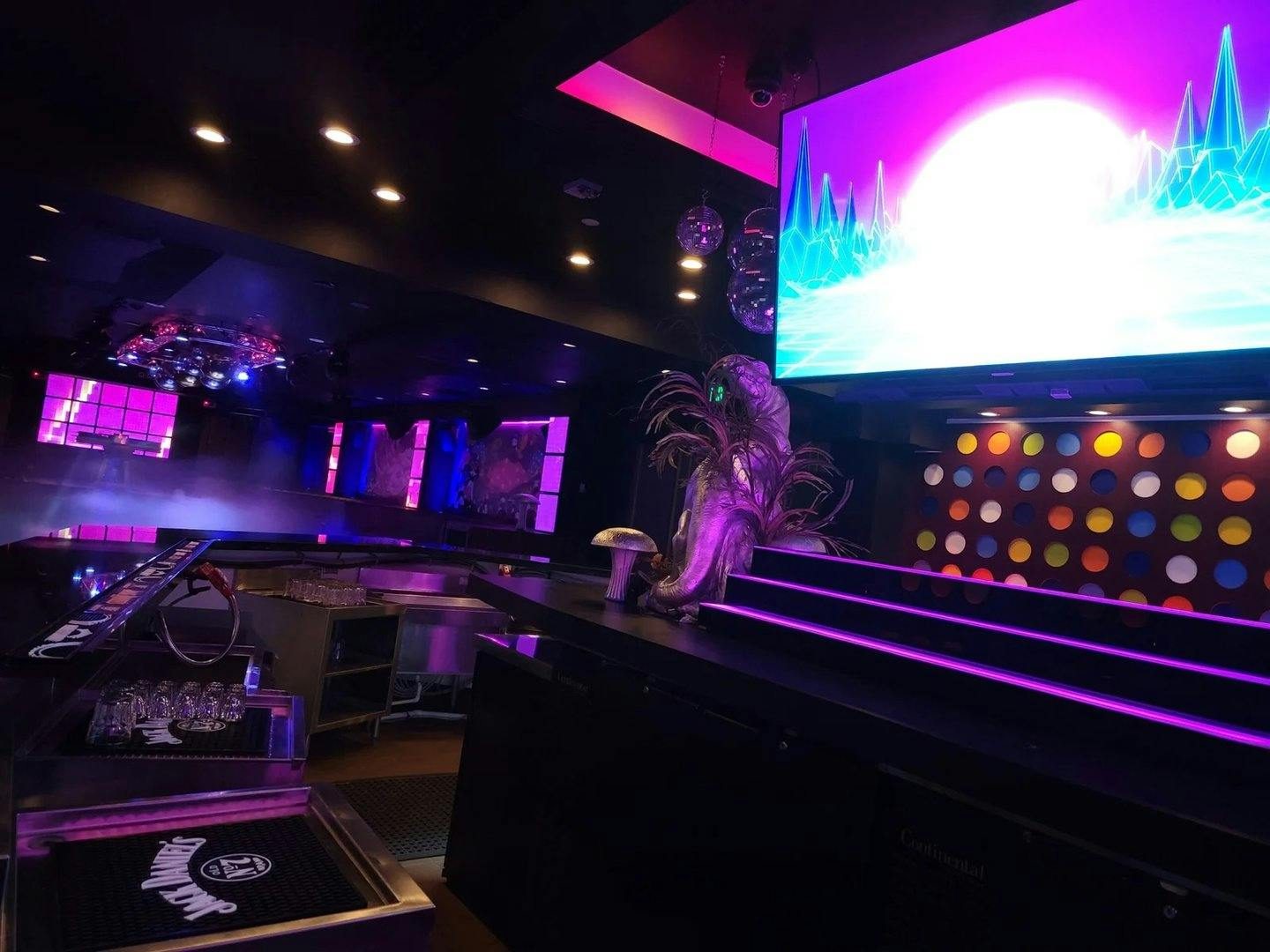
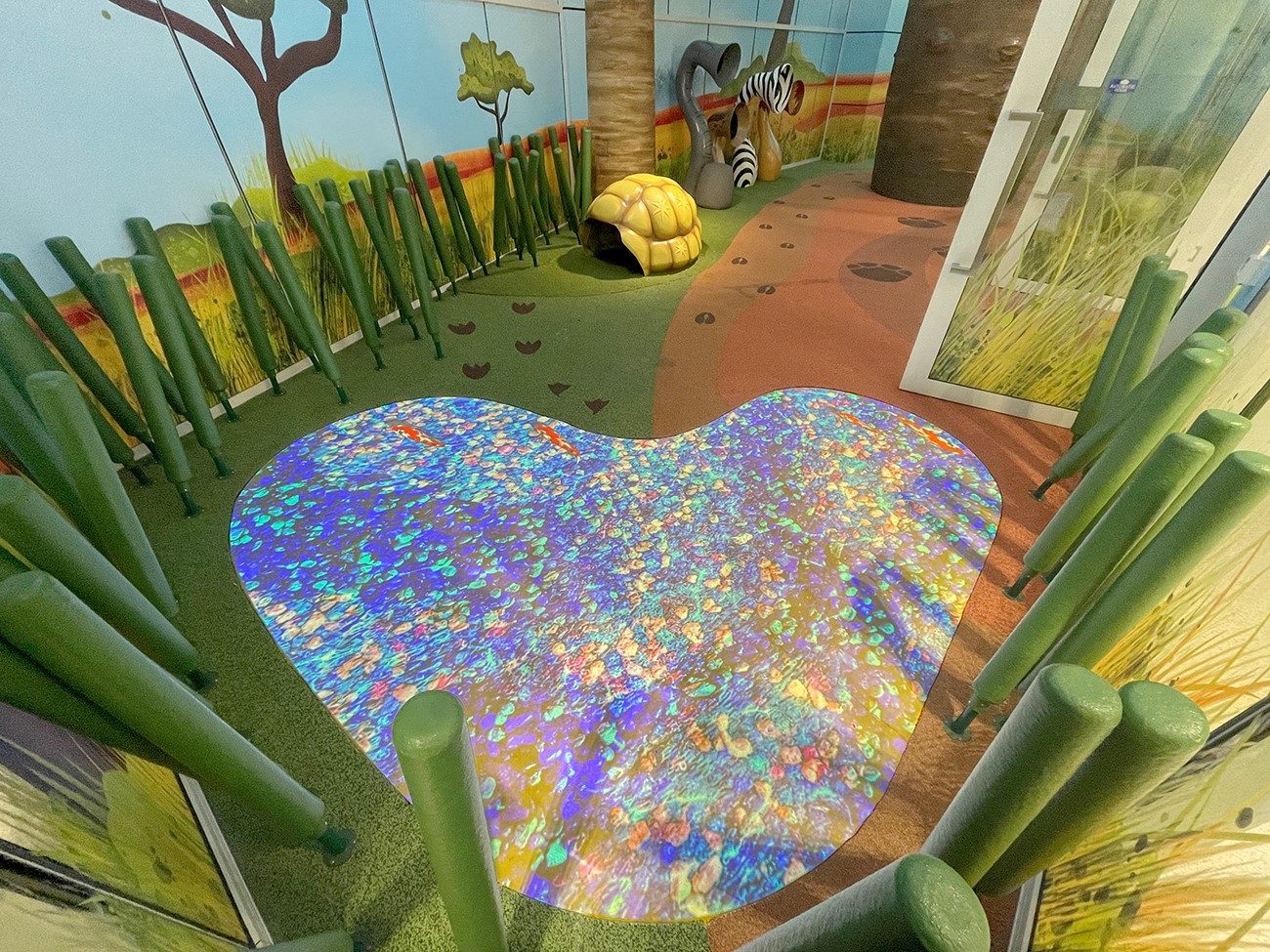
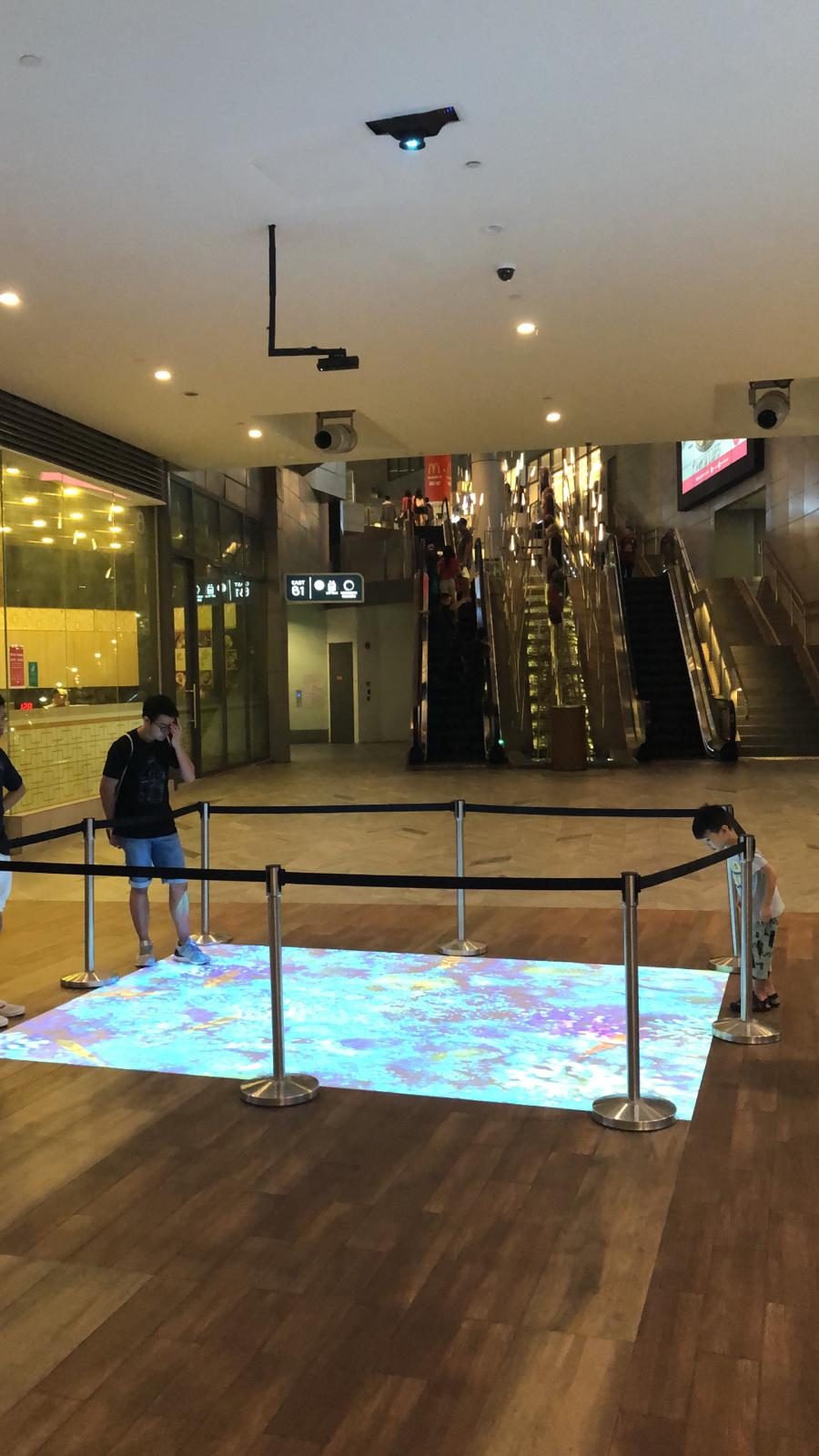
Interactive floor projection is the most widely deployed attraction in the industry — shopping mall atriums, play centers, restaurants and exhibition lobbies all run some version of "step on it and it ripples." This guide explains the working chain in plain language, lists the effects with the highest replay rates, matches mounting heights to lumens, and gives real prices from a single-unit kit to a multi-projector fused field, so integrators and venue owners can decide what to buy, where to mount it and how to accept delivery.
How It Works: One Chain, Three Links
- Projection. A ceiling- or truss-mounted projector throws the image onto the floor; short-throw lenses reduce the shadow visitors cast.
- Sensing. Three mainstream options: radar/lidar scans floor coordinates and shrugs off ambient light and shadows — the choice for outdoors and bright halls; camera plus image recognition is cheaper and suits dim indoor rooms; infrared rings with cameras power the classic water-ripple setups.
- Content host. The interactive host feeds detected coordinates into the effects software in real time, triggering ripples, particles or creatures. Latency must stay near 0.1 seconds — "stepped on it and nothing happened" kills the experience on the spot.
Here is the part most quotes omit: about 70% of perceived quality comes from sensing precision and software logic, only 30% from projector brightness. That is why identical projectors from different vendors produce wildly different floors.
The Effects With the Highest Replay Rates
| Effect | Gameplay | Typical venues |
|---|---|---|
| Water ripples | Footsteps open wave rings; add falling leaves or petals | Mall atriums, lobbies, ballrooms |
| Fish pond | Fish gather at feet, weeds sway, children "herd" the fish | Play centers, restaurants |
| Blooming flowers and fireflies | Flowers open and fireflies follow as people walk | Exhibition halls, weddings, sales galleries |
| Interactive soccer | Kick projected balls into goals, two-player scoring | FECs, sports parks, team building |
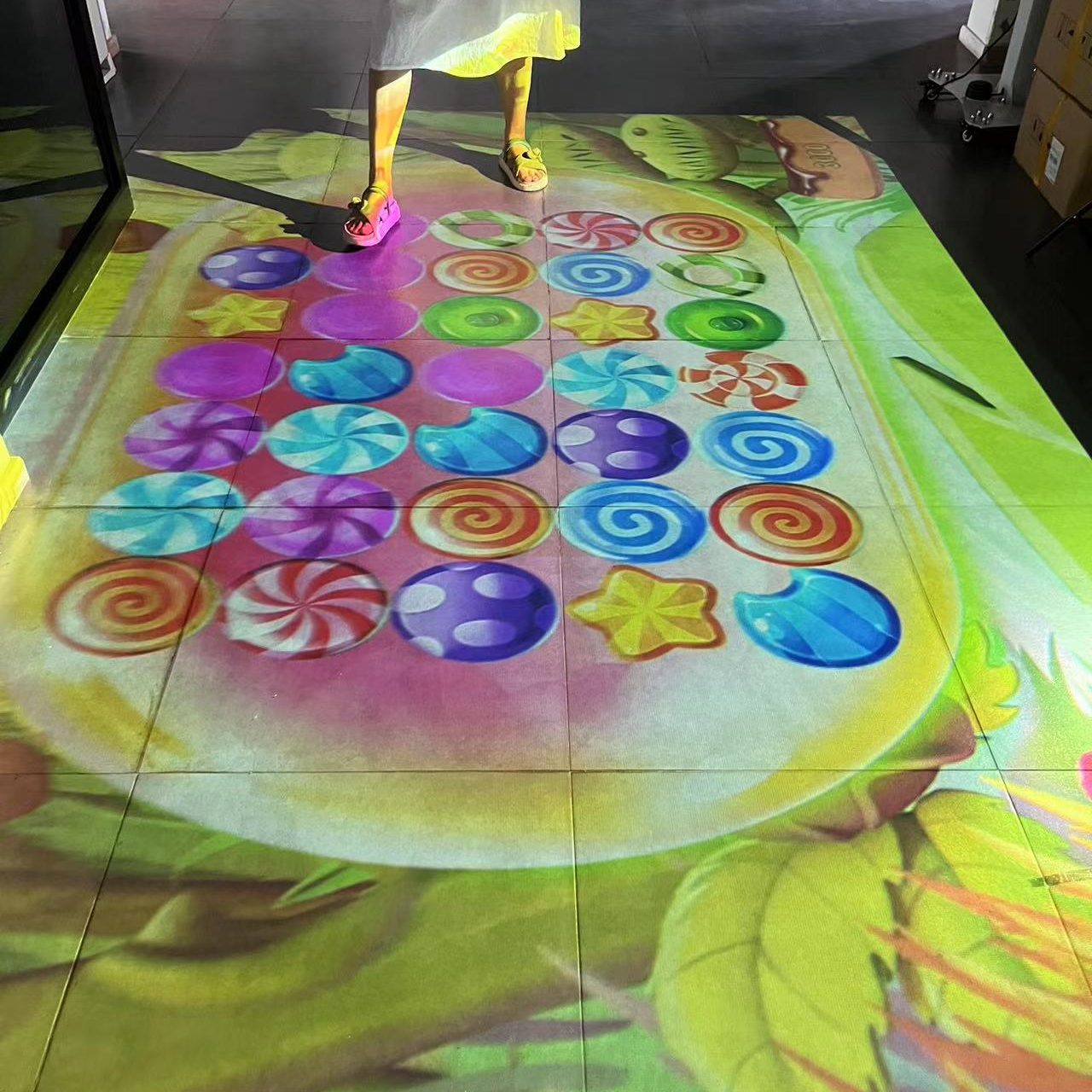
| Smash games | Step to clear patterns, multiplayer competition | Mall events, pop-up stores |
| Virtual chaser | A character chases people across the floor | Family venues, rehab training |
Content volume is the overlooked comparison item: mature vendors ship libraries of 50–200 switchable effects, and whether Christmas, Halloween and Lunar New Year themes actually get updated decides whether the attraction still feels fresh in year two.
Mounting Height and Lumens: The Deciding Table
| Mounting height | Single-unit coverage | Suggested lumens | Environment |
|---|---|---|---|
| 3 m | 4–5 m wide | 3,000–4,000 lm | Dim indoor rooms, restaurants |
| 4–5 m | 6–8 m wide | 5,000–6,000 lm | Mall atriums, exhibition halls |
| 6–8 m | 9–12 m wide | 8,000–10,000 lm | Tall atriums, strong ambient light |
| Outdoor / very large | Multi-unit fused | 10,000–20,000 lm plus blender | Plazas, cultural streets |
Rule of thumb: every step up in ambient light roughly doubles the lumen requirement. A glass-roofed atrium in daytime should be planned from 10,000 lumens upward, with radar sensing to keep sunlight from swallowing the interactions.
What It Costs: Single Unit to Fused Field
Factory and buyer-guide pricing, converted at roughly 1 USD = 7.2 CNY:
| Package | Configuration | Price range |
|---|---|---|
| Entry single-unit kit | One 3,000–4,000 lm projector, radar or camera sensing, built-in content host | $2,500–$4,500 (RMB 18k–32k) |
| Branded turnkey unit | Single all-in-one with installation and content library | from about $5,800 |
| Standard commercial system | High-lumen engineering projector, professional sensing, custom content | $5,000–$20,000 (RMB 36k–144k) |
| Large fused system | Multi-unit blending, fusion server, multi-radar calibration, custom content | $20,000–$50,000+ (RMB 144k–360k+) |
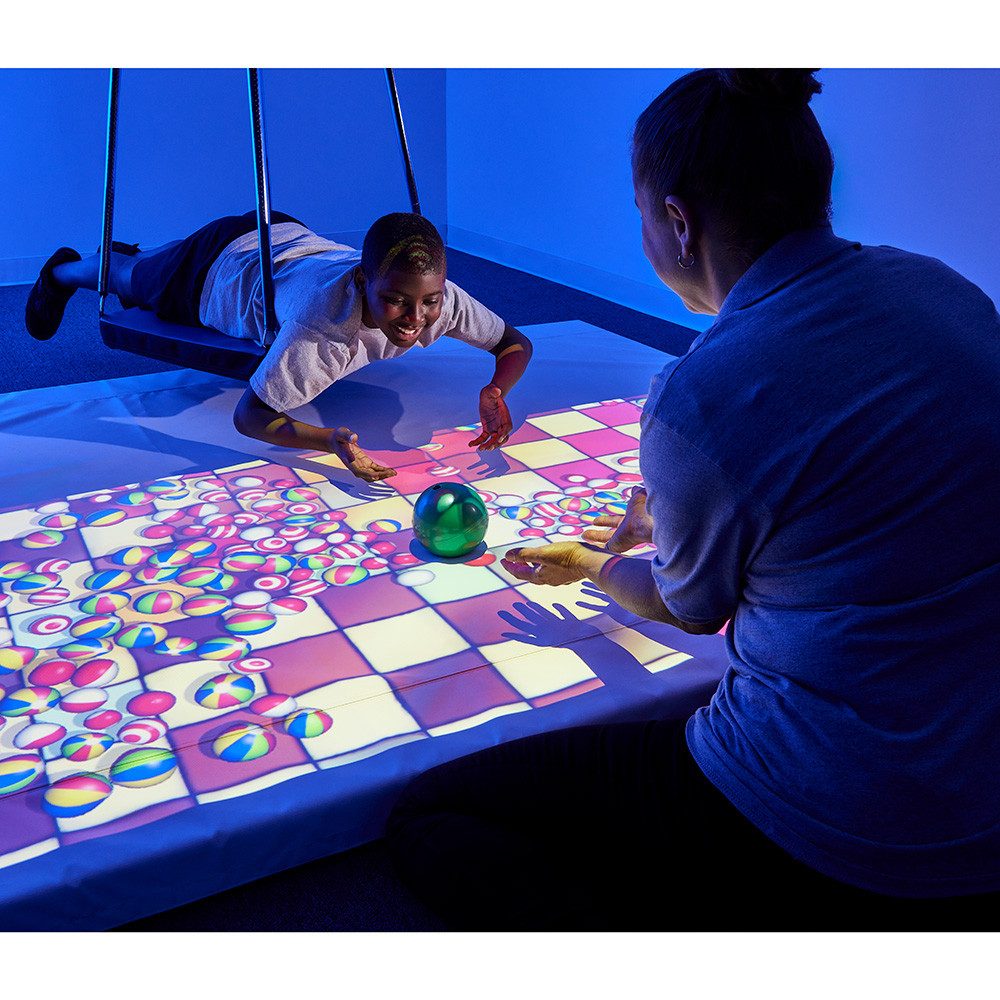
Understand where the price gap lives: entry kits and commercial systems differ sharply in sensing latency, ambient-light tolerance, content licensing and continuous-duty stability. Branded overseas packages (EyeClick's Obie line, for example) typically price higher, while comparable Chinese-factory solutions run 30–50% below — which is exactly why overseas buyers consolidate floor-interaction purchases in China.
Installation Pitfalls and the Acceptance Checklist
- Washed-out image: skylights and downlights gray out the picture — raise lumens, add shading, or move the play area.
- Body shadows: front projection always casts them; short-throw plus angled mounting or staggered dual units help.
- Blind spots: a single radar covers a limited angle; large fields need multi-radar stitching and calibration.
- Floor material: polished marble doubles the image and dark carpet eats brightness — specify matte, light-colored flooring or projection film.
- Heat and dust: leave airflow in the ceiling cavity; kitchens need grease-proof housings.
Accept delivery with numbers, not vibes: seams invisible with no visible dark corners; step response within 0.2 seconds; no dead zones (test-tap the field zone by zone); an 8-hour continuous run with no crash and no thermal dimming; content switching works and admin credentials are handed over.
Interactive floors stay the safest bet in the catalog: low entry cost, instant comprehension, high replay. Get the sensing method right, match lumens to your real lighting, and contract the content updates — the attraction will pull traffic for years. Deploying multiple units or a large fused field? Send your floor plan and ceiling height — Aurora Vision engineers will return a coverage drawing, a lumen plan and an itemized quote within 24 hours.