什么是互动投影?它是如何工作的?
互动投影的原理:投影机、感应、内容三大组件如何协作,应用场景与选购要点——极光视界工程师实用入门。
The Basic Idea
Interactive projection projects digital content onto a physical surface — a floor, a wall, a table — and then watches that surface with a sensor. When someone touches, steps on or moves through the projected area, the system detects the position of the interaction in real time and the content reacts instantly: fish swim away from footsteps, walls bloom under a fingertip, games score your movement.
The Three Components
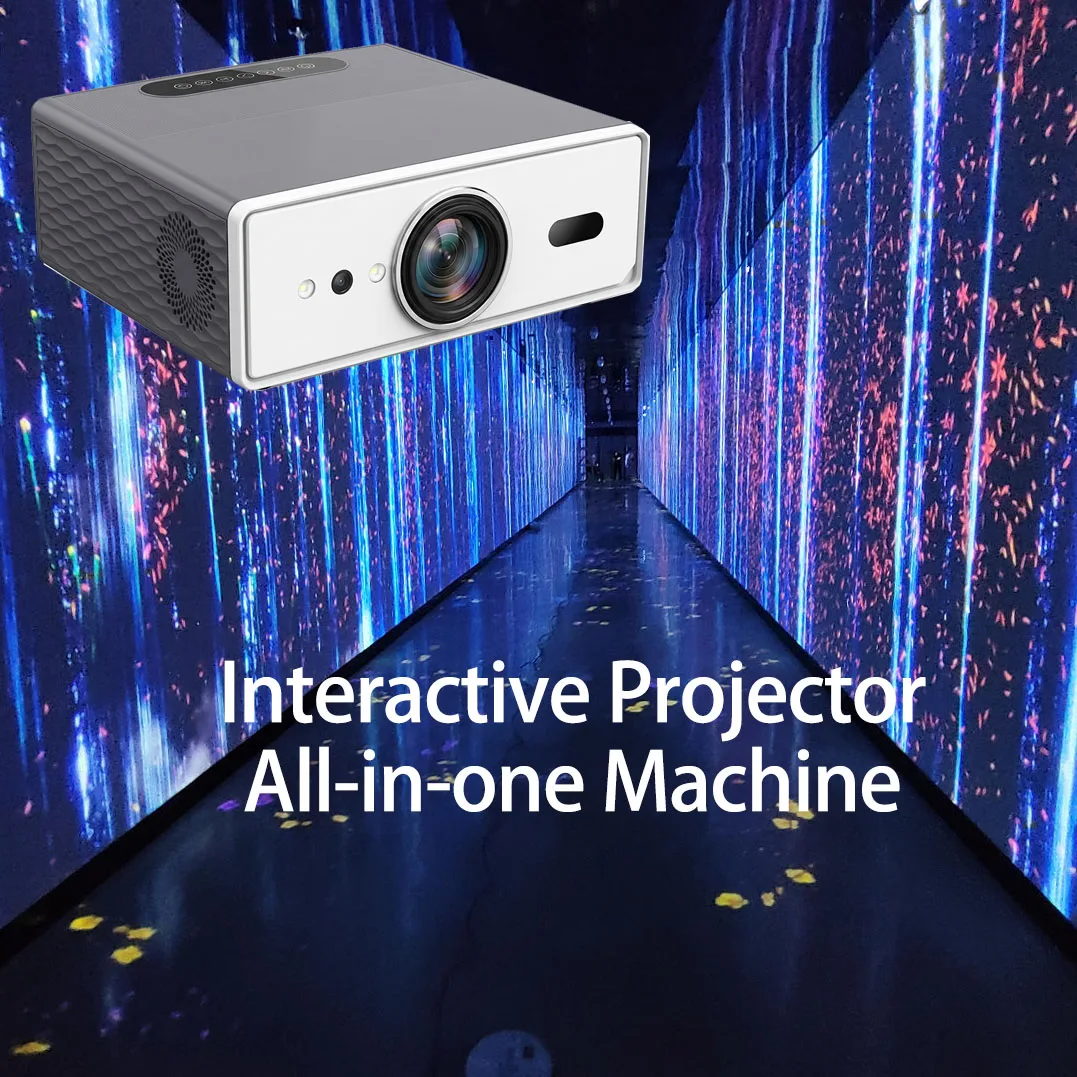
- Projection unit — renders the image. In modern all-in-one systems this is an LED or laser projector with the media player built in.
- Sensing — an infrared camera (often with IR fill light) or other sensors such as radar or pressure tiles detect where and how people interact. IR is popular because projected light doesn't interfere with it and no wearables are needed.
- Content — software that makes the reactions meaningful: games, art effects, brand animations or educational scenes.
Why It Beats Screens
A projected surface can be any size and any shape, costs far less per square meter than LED panels, and has nothing to break in reach of children. The surface itself — floor, wall, sand, even building façades — stays untouched when the system is off.
Where It Delivers Value
Family entertainment centers use interactive floors as traffic magnets. Museums use them to make exhibits explorable. Marketers use walls that react to gestures to stop foot traffic. And because an all-in-one interactive projector starts at a few hundred dollars, the technology is no longer reserved for big budgets.
Thinking about a specific space? Send us your floor plan — we'll respond with a coverage drawing and an equipment list within 24 hours.