Immersive Restaurant Guide: Costs, ROI and Formats
Star ceilings, ocean walls, blossoming tables — the four projection dining formats, how they lift covers and spend, and what owners actually pay for them.
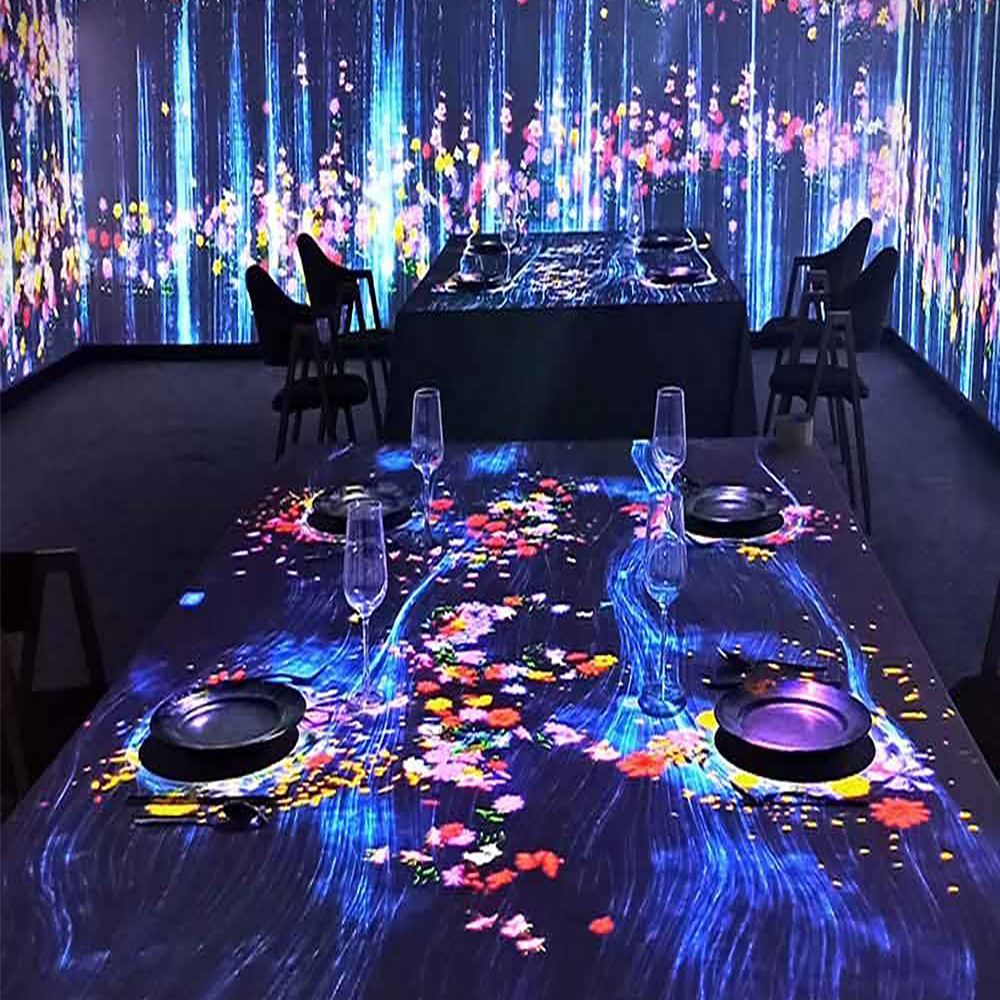
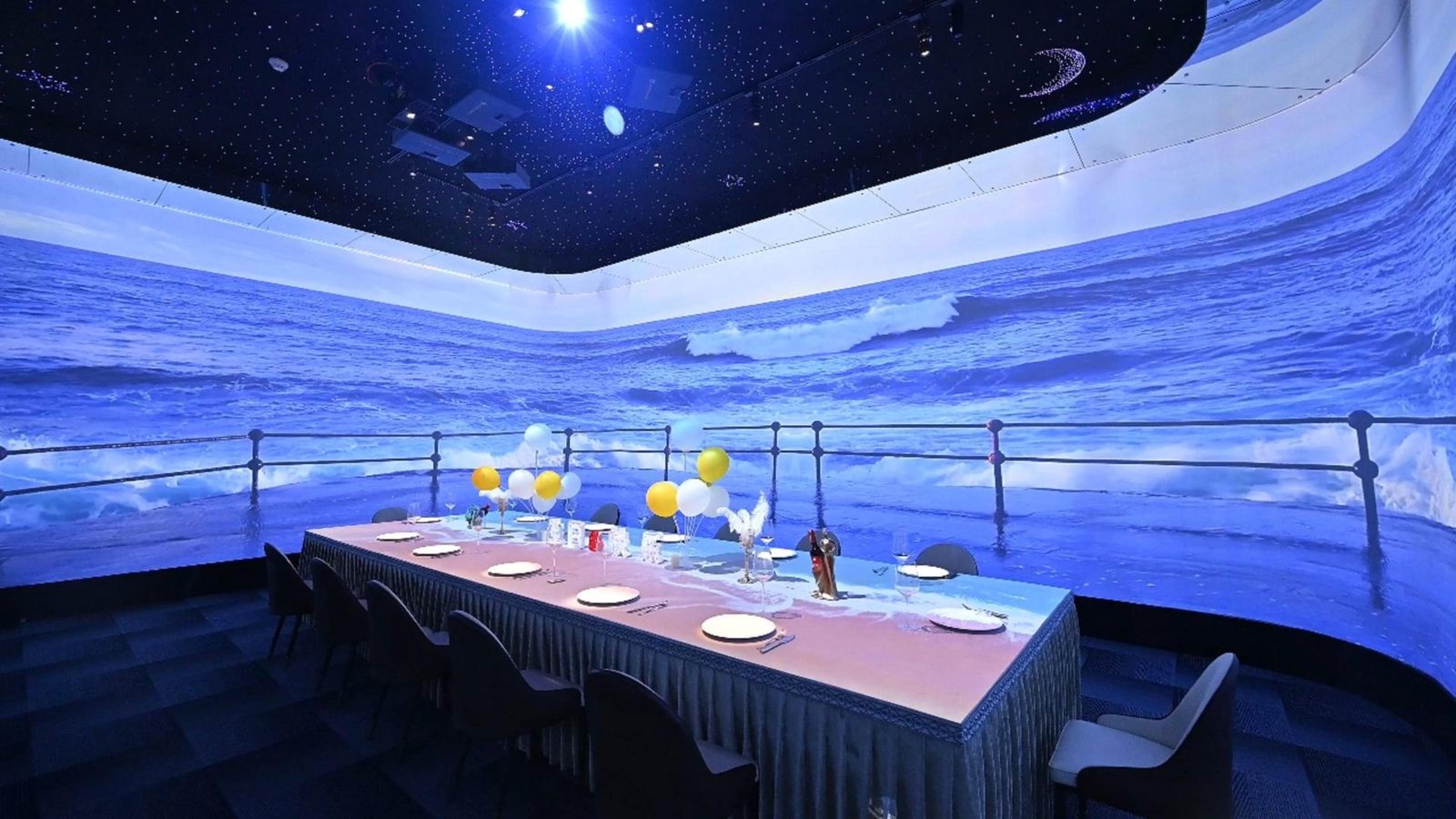
A star ceiling over the banquet hall, an ocean wall by the entrance, flowers blooming across the dinner table — immersive restaurants turn a meal into something guests photograph, post and pay a premium for. For restaurant owners, and for the integrators who serve them, the real question is not whether projection dining works, but which format pays back. Here are the four formats, the operating logic, and the cost ranges we see in the market.
Four Formats, Four Budgets
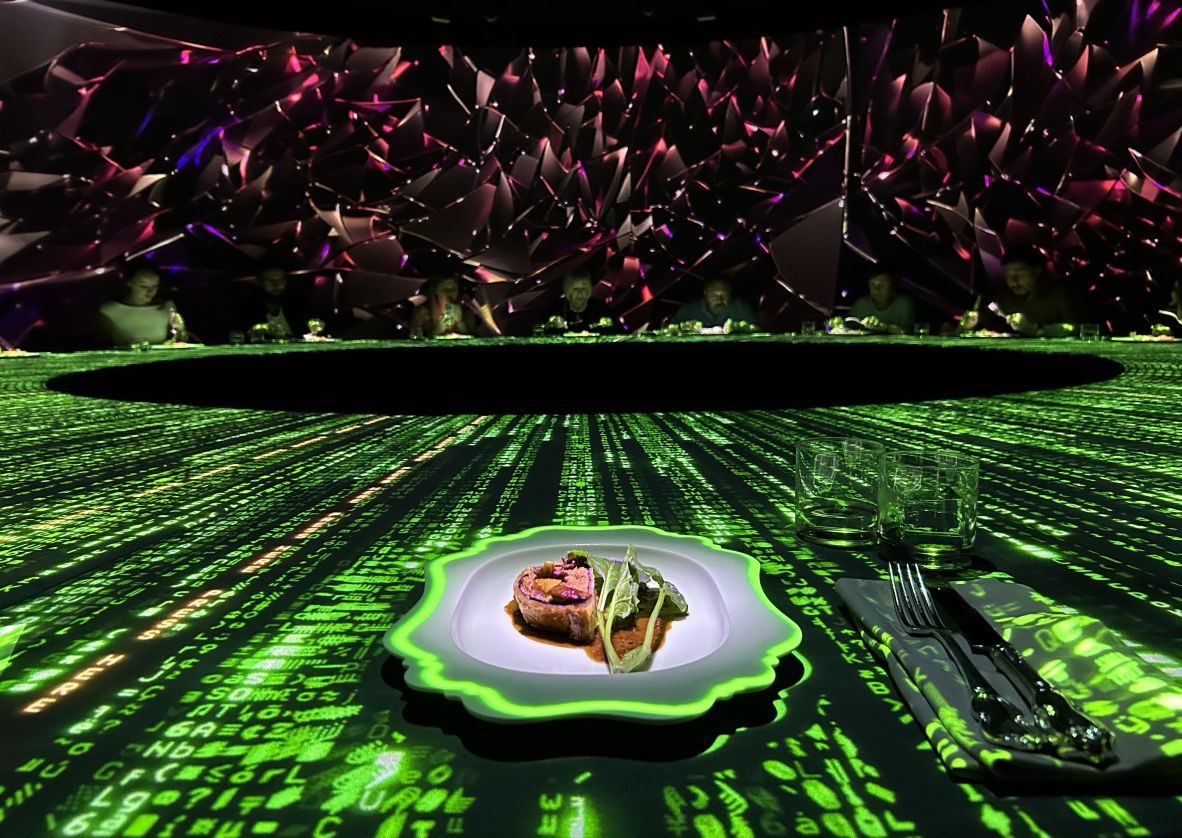
- Full-wrap light hall — walls, floor and ceiling all projected, scenes flowing with the courses. The complete "5D holographic restaurant" with maximum ceremony; suits banquet halls and large theme venues.
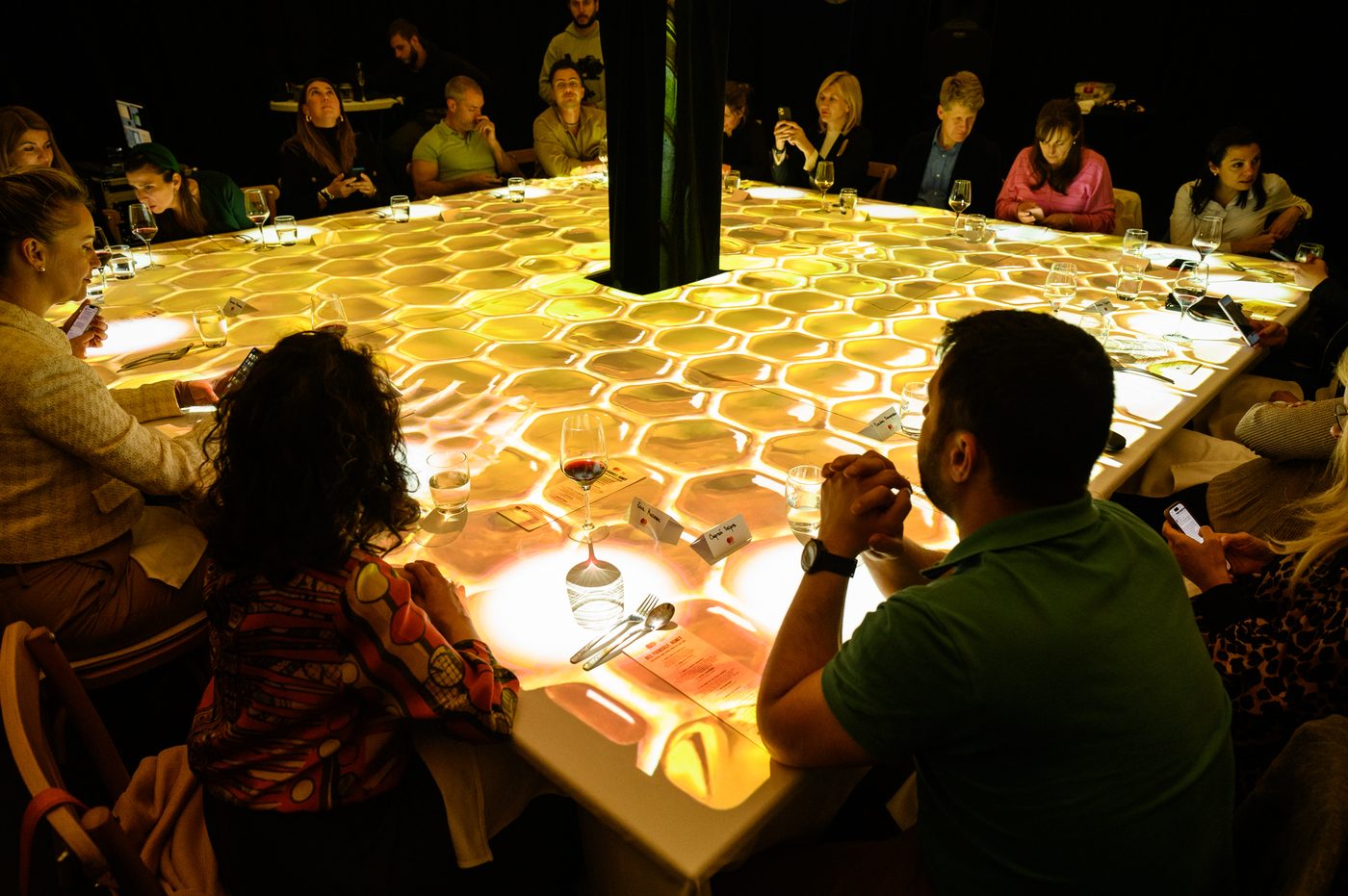
- Interactive tabletop projection — one projector per table (or zones along a long table) puts the menu, dish stories and ordering interaction directly onto the table surface. The lightest retrofit.
- Wall + table combo — the wall carries the main scene while tables ripple and bloom in response, so guests eat inside the picture. The best balance of cost and impact, and the mainstream choice.
- Themed private rooms — one or two rooms converted (cherry blossom, starry sky, ocean) and sold at a premium. Smallest investment, fastest proof of demand.
How Light Becomes Covers and Higher Spend
Projection dining earns its keep through three mechanisms:
- Social check-in traffic. Strong visuals feed short-video platforms; the fit-out doubles as a continuing content-marketing budget, and every posted video lowers acquisition cost.
- Higher spend per guest. Experience-led diners pay for occasion and ceremony: themed set menus, birthday and proposal packages, room minimums. Industry experience puts payback for high-end venues at roughly 12–18 months through spend and turnover gains — a range that varies widely by city and positioning.
- Scenario rotation. One system, many scenes: bright, brisk scenes speed up lunch turnover; romantic evening scenes lift dinner checks. The same hardware asset works two shifts.
| Operating lever | Metric it moves | Common practice |
|---|---|---|
| Photo spots | New guest arrivals | Design 1–2 camera-friendly positions, refresh scenes regularly |
| Occasion packages | Average spend | Birthday, proposal and business-banquet scene bundles |
| Time-based scenes | Table turnover | Fast-paced lunch scenes, immersive dinner scenes |
| Room premium | Room utilization | Themed rooms with minimum-spend rules |
Real Cost Ranges and Reference Cases
Projection restaurants are non-standard projects: quotes scale with floor area and the number of scenes. Public market information puts entry pricing at the equivalent of tens of thousands of yuan; for planning purposes:
| Tier | Typical range | Contents |
|---|---|---|
| Themed private room | CNY 30,000–80,000 (about US$4,200–11,200) | 1–2 short-throw projectors, custom scenes, central control |
| Mid-size wall + table hall | CNY 100,000–250,000 (about US$14,000–35,000) | Multiple projectors, blending or tiling, interactive content, audio |
| Full-wrap banquet hall | From CNY 300,000 (about US$42,000), rising with area | Whole-space projection, fusion system, control, bespoke content |
Reference cases: Quanjude's origin store paired immersive light shows with roast-duck heritage animation across multi-screen walls; a Shanghai digital restaurant runs a projected pre-meal show at 1:1 scale on every tabletop; several seafood and fashion-dining brands used deep-sea themed scenes to pull traffic against the market.
Implementation Notes
- Room first, hall later. Convert one themed room, watch the booking data for a quarter, then decide on the full hall.
- Design for grease and glare. Kitchens mean ambient light and oil film: specify high-brightness laser short-throw units, sealed and cleanable optics, and keep heat outlets away from cooking lines.
- Subscribe to content, do not buy it once. Seasonal themes drive repeat visits — write "N new scenes per year" into the contract so the room never goes stale.
- Build the operations layer. Reservations, a photo route, scene-switch procedures and staff scripts decide whether the light actually converts to premium.
Ready to test the water? Send us your dining area dimensions and theme direction — Aurora Vision will propose a phased format plan with per-scene pricing.